
You are here


Delivering the Placenta
When does the placenta come out?
The placenta is known as the afterbirth and it comes out after birth. Many new moms barely recall delivering their placenta. The placenta is typically delivered within 5 to 30 minutes after the birth of the baby, and at that moment mom is usually busy bonding with her new baby.
The placenta is an amazing organ for many reasons – just one of them is that the placenta is the only organ designed to be temporary1. The typical full-term placenta is almost 9 inches (23 centimeters) across, about an inch thick at the center (2.5 centimeters), and weighs a little over 1 pound (500 grams)1. The size of the placenta scales with the size of the baby.
What triggers delivery of the placenta?
There is no one trigger that tells the placenta when its time is up; there is a cascade of hormonal changes, helped by contractions, that signal to the placenta it is time to let go of the uterine wall2-5.
From the second trimester onwards, the placenta is responsible for producing the hormones that sustain the pregnancy1-3. One hormone produced in the placenta is progesterone, which keeps the uterus relaxed. Labor is triggered by a combination of progesterone withdrawal plus simultaneously rising levels of the two hormones prostaglandin and oxytocin, which trigger uterine contractions2-5. After a vaginal delivery, the uterus continues to contract and starts to shrink. This process will normally force the placenta to detach from the uterine wall, and the ongoing contractions will push the placenta out.
If you deliver via cesarean (also known as C-section), your doctor will remove the placenta from your uterus during surgery. After the baby has been delivered, the surgeon usually just needs to gently tug on the umbilical cord and the placenta will detach6. If that does not work, the doctor will insert a gloved hand between the edge of the placenta and the uterus and gently separate the placenta6.
Active management of placenta delivery
Moms that are delivering in developed nations will receive a dose of Pitocin at the moment of birth. This is called active management of placenta delivery. Pitocin is a brand name for a synthetic copy of the natural hormone oxytocin. In a hospital setting the Pitocin can be added to the intravenous fluids, whereas in a midwife-attended birth it is given by an injection into the thigh.
The purpose of giving mom Pitocin at the time of birth is to ensure that she continues to have strong contractions and delivers the placenta promptly. Studies have shown that giving Pitocin at birth reduces the risk of post-partum hemorrhage by 40%7. Excessive bleeding after birth is the top cause of complications and maternal mortality from childbirth7-9. Hence, medical authorities around the world recommend an extra dose of Pitocin at birth as a safety measure8,9.
Healthy placenta equals healthy pregnancy
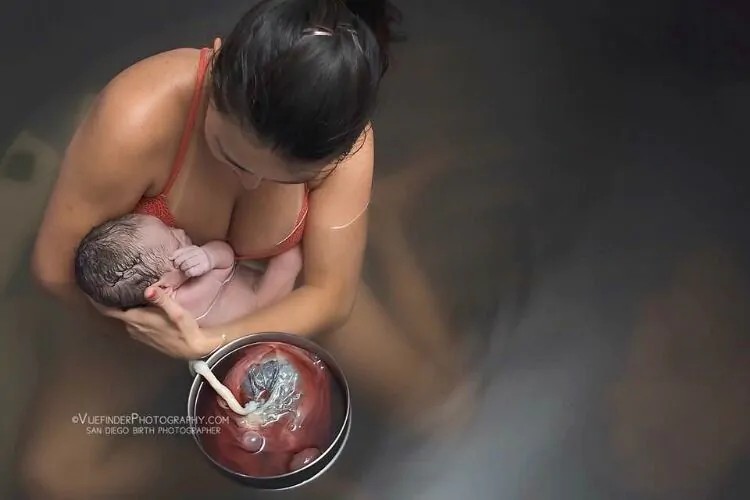
When the placenta comes out, sometimes your medical team can tell just by looking at it whether you had a healthy pregnancy. The first thing they will check is whether the placenta is complete, because if pieces of the placenta are retained in the uterus they can lead to bleeding and infection10.
The placenta may have little white crystals, called calcifications, on the maternal side. These are very common when the pregnancy goes beyond the due date, because your placenta knows it is temporary and its time is running out. However, if you are not past your due date and your placenta has calcifications, your medical team may attribute them to health issues during your pregnancy11,12. These calcifications are visible in ultrasound exams during pregnancy, and if they are showing up too soon in the pregnancy your doctor may advise you to deliver the baby earlier12.
Occasionally there is a surprise during delivery of the placenta. For example, a second placenta may emerge that belonged to a vanished twin. If the mother does not notice this, usually the doctors will not say anything until they have a pathology report to be sure.
Taking a trip to pathology
If your medical team has any concerns about the health of your pregnancy or the outcome, they will probably send your placenta to the pathology department of the hospital for examination. For example, all placentas from moms that were diagnosed with high blood pressure (preeclampsia) during pregnancy are routinely sent to pathology, because preeclampsia is blamed on poor placenta attachment. Another rule is that if the baby needs resuscitation or is sent to the NICU, then the placenta will be sent to pathology. There is a checklist of medical circumstances under which the placenta should be examined by pathology13.
What happens to the placenta in the pathology department is like an autopsy of the organ. The placenta tissue is fixed with a preservative, and then it is sliced into thin sections to check for abnormalities in the tissue and vasculature14. Slides are prepared for microscopic examination.
The frequency with which placentas get sent to pathology is a topic of debate among medical professionals. Currently, in 2026, the American College of Obstetricians and Gynecologists (ACOG) does not have active guidelines for when the placenta should be sent to pathology. In practice, between 20% and 50% of placentas go to pathology15. The decision to send the placenta to pathology is made by the delivering doctor; hence the fraction of placentas that are sent varies a lot between doctors and also depends on the delivery setting (community hospital versus research hospital)15. It has been argued that there is a need for evidence-based guidelines, and that the current frequency with which placentas end up in pathology is excessive15.
Taking the placenta home
Many parents want to take their placenta home, either to follow ancient cultural traditions, or to pursue the relatively new trend of placenta encapsulation. The rumor that you can sell your placenta for $50,000 is not true (it is illegal and there are no buyers). Hospitals treat the placenta as medical waste, and in the US this waste is regulated under state laws. In order to help parents navigate the rules for taking their placenta home, the Parent’s Guide to Cord Blood Foundation has compiled a guide to your placenta rights under US state laws.
The Society for Pediatric Pathology has issued guidelines for medical professionals to help them manage requests to release the placenta16. In all cases, parents must sign a liability waiver. Hospitals are concerned about liability from the placenta because it could carry infections or toxic chemicals, or it could become spoiled if not handled properly17. Parents that have made plans to bring the placenta home need to bring a cooler to carry it and arrange for someone to pick it up promptly. If the placenta has gone to pathology, it is rare to be able to retrieve it.
Summary
The placenta is an amazing organ and these days parents are paying more attention to the delivery of the placenta and giving more thought to how they want to dispose of their placenta.
References
- Author Unknown. Placenta. Cleveland Clinic. Last updated 2025-12-15
- Linzer DIH, Fisher SJ. The Placenta and the Prolactin Family of Hormones: Regulation of the Physiology of Pregnancy. Molecular Endocrinology. 1999; 13(6):837–840.
- Zakar T, Hertelendy F. Progesterone withdrawal: key to parturition. Am J Obstet. Gynecol. 2007; 196(4):289-96.
- Mesiano S. Progesterone withdrawal and parturition. J. Steroid Biochemistry and Molecular Biology. 2022; 224:106177.
- Romero R, Munoz H, Gomez R, ... Mitchell MD. Increase in prostaglandin bioavailability precedes the onset of human parturition. Prostaglandins, Leukotrienes and Essential Fatty Acids. 1996; 54(3):187-191.
- Merchavy S, Levy A, Holcberg G, Freedman EN, Sheiner E. Method of placental removal during cesarean delivery and postpartum complications. Int. J Gynecol. Obstet. 2007; 98(3):232-236.
- Anderson J, Etches D. Prevention and Management of Postpartum Hemorrhage. American Family Physician. 2007; 75(6):875-882.
- American College of Obstetricians and Gynecologists (ACOG). Postpartum Hemorrhage. Practice Bulletin. Oct.2017; No.183
- World Health Organization. WHO recommendation on routes of oxytocin administration for the prevention of postpartum haemorrhage after vaginal birth. Online Book. Published 2020
- Author Unknown. Retained Products of Conception. Cleveland Clinic. Last updated 2024-09-09
- Wallingford MC, Benson C, Chavkin NW, Chin MT, Frasch MG. Placental Vascular Calcification and Cardiovascular Health: It Is Time to Determine How Much of Maternal and Offspring Health Is Written in Stone. Frontiers in Physiology. 2018; 9:1044.
- Chen KH, Chen LR, Lee YH. Exploring the relationship between preterm placental calcification and adverse maternal and fetal outcome. Ultrasound in Obstet. Gynecol. 2011; 37:328-334.
- Akhavan S, Borna S, Abdollahi A, Shariat M, Zamani N. Pathologic examination of the placenta and its benefits in treatment plan or follow-up of patients: a cross-sectional study. Eur. J Med. Research. 2022; 27:113.
- The Children's Hospital at Westmead. Placenta Disc Dissection Tutorial - for medical professionals. YouTube. Accessed 2026-04-25
- Polnaszek BE, Clark SL, Rouse DJ. Pathologic Assessment of the Placenta. Evidence Compared With Tradition. Obstetrics & Gynecology. 2022; 139(4):660-667.
- Carreon CK, Ravishankar S, Parast MM, … Roberts DJ. Releasing Placentas to Families: A Unified Recommendation From the Perinatal Committee of the Society for Pediatric Pathology. Archives Pathology & Lab Med 2023; 147(5):515–517.
- Verter F, Ben Senior, L. Placentophagy: Eating Your Placenta. Parent's Guide to Cord Blood Foundation Newsletter Published 2021-08