
You are here
The Business of Selling Placentas Collapsed in 2026
Scientific Evidence for Biologic Skin Substitutes
A 2019 meta-analysis of 54 publications shows that wounds treated with biologic grafts close significantly faster1. The difference is a factor of 2.81 after 6 weeks. Closure of the wound surface is only one step towards healing; the treating physician also looks at the patients’ rates of infection, hospitalization, loss of mobility, and eventual amputation. However, wound closure is the benchmark that is typically used in clinical trials that test biologic grafts against the conventional standard of care.
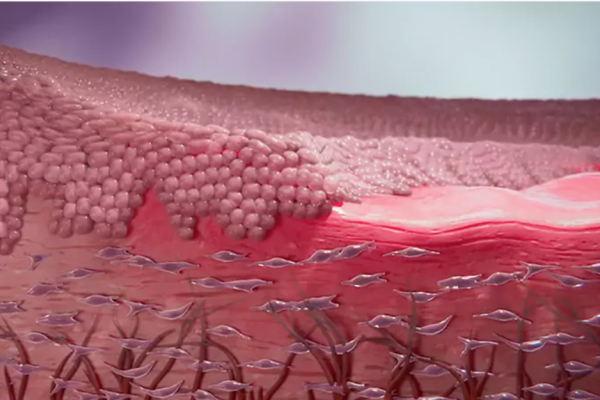
Image credit: Apligraf
Size of the US Skin Substitute Market
To explain how health insurance reimburses the use of biologic skin substitutes to treat wounds, we must first clarify some terminology2. Medicare is the US national health insurance that covers all citizens aged 65 years and older. Decisions about how much to reimburse for products and services received under Medicare are made by a US federal agency called CMS, or Centers for Medicare & Medicaid Services.
Medicare spending on biologic skin substitutes has increased dramatically in recent years3:
- 2022: $1.6 Billion
- 2024: $10 Billion
This huge spending increase begs the question: did the number of patients increase 10-fold in only two years, or was there simply a huge surge in spending? Investigative reporting has revealed that the rising costs were primarily driven by excessive usage of expensive products2-4.
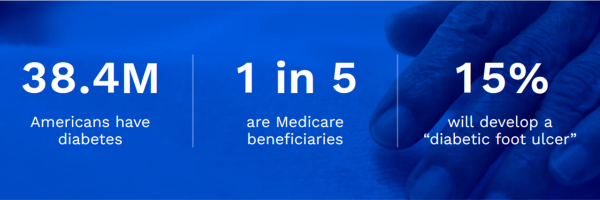
Image credit: saveourwoundcare.org
Pre-2026 Regulatory Landscape
As of July 2025, there were 280 skin substitute products that had been given billing codes (Q-codes) which made them eligible for reimbursement though CMS. It is notable that, in July 2025, 75% of the eligible wound grafts were sourced from placenta.
Here is a graph of the Average Sales Price (ASP) of those 280 products. It is pretty shocking that the prices ranged over a factor of 1800, from $2.50 to $4500 per sq cm. The mean of these prices was $1015 per sq cm, whereas the median price was $ 537 per sq cm.
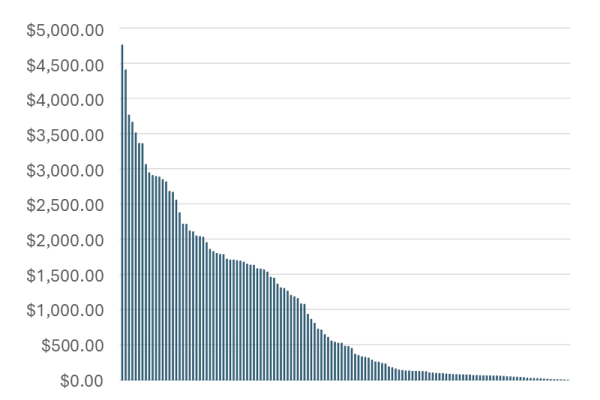
Image credit: Parent's Guide to Cord Blood Foundation
Pre-2026 CMS Regulatory Loophole
- CMS allowed physicians in private practice to buy NEW skin substitute products at a discount and then sell them at full price4.
- The manufacturer of the skin substitute product could repeatedly declare it as NEW.
- Industry impact: The demand for properly procured placentas exceeded the donated supply5.
- Patient Impact: In some cases, patients in hospice repeatedly received unnecessary wound care, purely so that caregivers could rack up profits6.
- This loophole was a classic case of “Fraud, Waste, and Abuse”7
CMS Proposed Regulatory Changes2
- Require physicians treating wounds with skin substitutes to compile detailed justification for and documentation of product usage.
- Only 17 skin substitute products would be approved for Diabetic Foot Ulcers (DFU).
- Only 5 of the 17 skin substitute products would be approved for Venous Leg Ulcers (VLU).
- Those 17 products (from 9 companies) were chosen because they are the only skin substitutes with clinical trial evidence.
- Only 8 of the 17 products are sourced from newborn tissues (5 of the 8 are placental). The others are sourced from the skin of human cadavers, or from animal sources that include bovine, porcine, or fish skin.
Timeline of Implementing CMS Regulatory Changes2
- Nov. 2024: CMS proposed new rules to take effect Feb. 2025
- Feb. 2025: New rules put on hold as part of a blanket federal hold
- Mar. 2025: One company gave a $5 Million lobbying donation
- April 2025: New CMS rules postponed to Jan. 2026
- July 2025: CMS proposes a flat reimbursement of $127.28 per sq cm
- Dec. 2025: Restriction to 17 approved products was dropped on Christmas Eve
2026 Status of the Placenta Industry
- Reimbursement is now limited to $127.28 /sq cm (23% of the 2025 median) for all skin substitute products.
- The placenta BOOM has gone BUST: Many placenta companies are bankrupt or paused.
- Nonetheless, the established pharma companies that make skin substitute products which have been through clinical trials are capable of meeting the 2026 price limit.
- The price limit is unaffordable for small placenta procurement companies that cannot rely on the economies of scale or do not have other profitable products.
- It is easier for grafts that are sourced from cadaver skin to meet this price limit than for grafts that are sourced by consenting mothers to donate placentas.
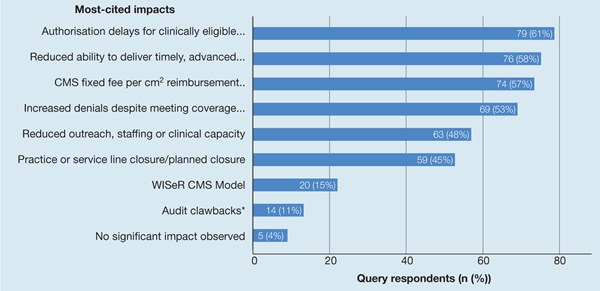
Image credit: Figure 4 of Tettelbach WH, Armstrong DG, Tucker T, et al. 2026
2026 Status of Patient Access to Skin Substitutes8
- Many of the physicians in private practice that offered wound care have stopped.
- Over half of the mobile clinics providing wound care have closed, including both clinics providing nursing home visits and clinics that travel to rural areas.
- Hospitals offering wound care are eligible for additional facility reimbursements, which makes it more affordable for them to continue providing wound care.
- Now most patients can only get care for chronic wounds in hospital clinics.
Pros and Cons of the Placenta Industry Consolidation
PROS | CONS |
|
|
Placenta Industry Lessons Learned
- A few bad actors can destroy an entire industry.
- Lobbying can backfire: The lobbyists were successful in thwarting the restriction to 17 products, but instead CMS imposed a draconian price limit.
- Industry consolidation has pros and cons, and can create new barriers for patients.
- Lobbying continues, and the CMS regulations could change again!
References
- Gordon AJ, Alfonso AR, Nicholson J, Chiu ES. Evidence for Healing Diabetic Foot Ulcers With Biologic Skin Substitutes: A Systematic Review and Meta-Analysis. Annals Plastic Surgery. 2019; 83(4S Suppl 1):S31-S44.
- Verter F. Countdown to changes in payments for placenta wound dressings. Parent's Guide to Cord Blood Foundation Newsletter Published 2025-12
- Kliff S, Thomas K. Trump Administration Delays Plan to Limit Pricey Bandages. NYTimes. Published 2025-04-11
- Firth S. Experts Sound the Alarm on Pricey Skin Substitutes in Wound Care Industry. Medpage. Published 2025-03-18
- Tibbot T, Frazier G. Can You Sell Your Baby’s Placenta? Parent's Guide to Cord Blood Foundation Newsletter Published 2022-12
- Accountable for Health Accessed 2026-11-01
- Office of Inspector General. Report Fraud, Waste, and Abuse. US Dept. HHS. Accessed 2026-11-01
- Tettelbach WH, Armstrong DG, Tucker T, et al. Early reported effects of the 2026 CMS Physician Fee Schedule on patient access to CAMPs in wound care: a national clinician and practice survey. J Wound Care. 2026; 35(Sup7a):S5-S14.