
You are here
From Bank to Bedside: MEDEZE of Thailand
From Storage to Therapy: 40,000+ Contracts. 500+ Lives Transformed.
The true value of the MEDEZE business model is measured in scale and in lives. With over 40,000 active storage contracts under management — representing more than 50% of Thailand's stem cell banking market — MEDEZE has built the largest biological preservation network in the country. Beyond storage, the company has leveraged its biobank to facilitate more than 500 autologous and allogeneic therapies.

The Foundation of a World-Class Biobank
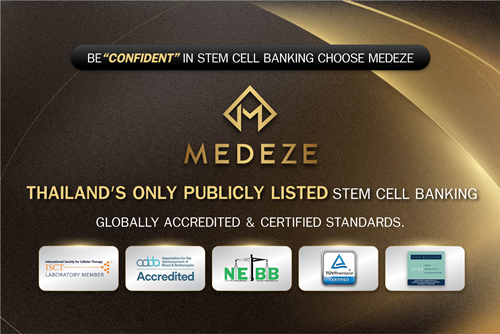
A "Bedside" application is only as effective as the "Bank" that supports it. To ensure every collected cell is preserved at its highest potential, MEDEZE operates with a level of scrutiny and transparency befitting its status as a listed company on the Stock Exchange of Thailand. This commitment to excellence is evidenced by its cord blood banking services, which are accredited by the Association for the Advancement of Blood & Biotherapies (AABB).
MEDEZE was founded by Thai obstetrician Veerapol Khemarangsan, MD, in July 2010 - originally under the name Bangkok Stem Cell - and has spent over 15 years building Thailand's most trusted biological preservation institution. Today, the company holds more than 50% market share in Thailand, serves over 12,000 clients, manages more than 40,000 storage contracts, and operates through a network of 260+ hospital partners across several countries in Southeast Asia.
What distinguishes MEDEZE from regional competitors is its vertically integrated operational model. From biological material collection to diagnostics, cell processing, storage, expansion, and clinical application, MEDEZE controls every stage, reducing third-party dependency and maintaining consistent quality standards. All procedures are conducted in Cleanroom Class 100 laboratories, a high-standard sterile environment certified by the National Environmental Balancing Bureau (NEBB).
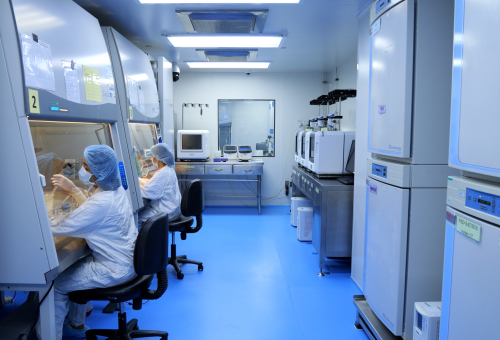
To push the technology boundaries further, MEDEZE is installing the world’s first fully automated robotic cell culture system from Shibuya Corporation (Japan). Utilizing 100 isolated incubation chambers, this 400-million-baht innovation maintains optimal sterile environments, effectively eliminating human error and ensuring the highest purity for cell growth. Throughout this entire process, every step is overseen by a dedicated team of cellular therapy doctors and scientists specializing in stem cell viability for both transplantation and regenerative medicine.
MEDEZE does not simply store umbilical cord blood and other perinatal cells. Adult cell banking isolates mesenchymal stromal cells (MSC) from adipose tissue that can be used for applications in chronic diseases of aging. MEDEZE has also developed advanced immune cell services, enabling clients to expand and store natural killer (NK) cells for future immunotherapy use. In 2025, MEDEZE introduced Thailand's first hair follicle stem cell banking service, supported by its proprietary Hair Follicle Restoration platform.
MEDEZE operates without debt and holds cash reserves exceeding THB 2.1 billion (USD 63 million). This financial independence enables MEDEZE to fund research and development projects.
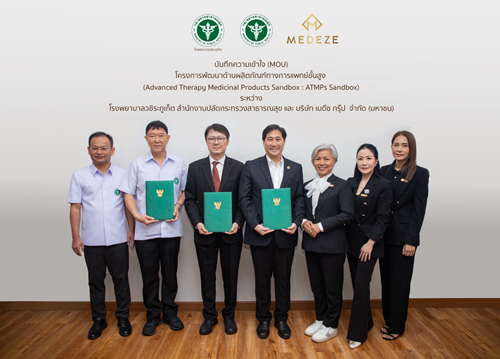
From Biobank to Biopharma: The ATMP Sandbox
MEDEZE has evolved from a simple storage facility into a licensed therapeutic provider, playing a pivotal role in the national healthcare strategy. As the sole private participant in the Advanced Therapy Medicinal Products (ATMPs) Sandbox initiative led by the Thailand Ministry of Public Health, the company is at the forefront of driving Thailand's health economy.
Furthermore, MEDEZE has established a strategic joint venture with the Government Pharmaceutical Organization (GPO) to produce cell culture media domestically, strengthening the biomedical supply chain for cell therapies across Southeast Asia.
Beyond Southeast Asia, MEDEZE is establishing partnerships in the Middle East, including a collaboration with the Middle East Healthcare Company (MEAHCO), replicating its integrated operational model in markets with high therapeutic demand.

Real World Impact: Patient Breakthroughs
The most powerful evidence of "Bank to Bedside" comes from the patients themselves. MEDEZE is conducting clinical trials within Thailand that treat osteoarthritis, degenerative disc disease, skin rejuvenation, colorectal cancer, and immune enhancement. These trials position the company to become one of the first private firms in Southeast Asia to commercialize licensed cell therapies by 2026.
In a pioneering clinical trial, clinicians successfully used Natural Killer (NK) cells derived from cord blood to treat a 52-year-old woman with advanced-stage endometrial cancer. Because her own immune activity was extremely low, the team utilized HLA-mismatched cord blood units to stimulate an anti-tumor response, resulting in significant tumor reduction and improved physical well-being without adverse effects.
Another inspiring story is that of Sophie, a young girl diagnosed with a brain tumor at just 8 months old. Through specialized NK cell therapy, her tumors shrank, her vision improved, and she achieved a recovery that has redefined hope for cancer care.
These breakthroughs are part of a broader push toward Adoptive NK Cell Therapy, where "immune warriors" are strengthened in the lab to target chronic inflammation and senescent cells, the root causes of aging-related diseases.
Even in specialized fields like aesthetics, the MEDEZE Hair Renaissance uses cryopreservation technology to multiply just 50 strands of hair into 50 million viable stem cells, providing a long-term solution for thinning and hair loss.

A Vision for the Future: Living to 120
MEDEZE's vision is an investment in a future where humans can live healthily for up to 120 years. By partnering with centers like the VAANAA Longevity Clinic, the company provides holistic, individualized healthcare that combines deep health screening with advanced regenerative medicine. Through its commitment to innovation from international collaborations and robotic systems, MEDEZE ensures that the miracle of stem cells is always within reach for those who need it most.