
You are here
Neonatal cardiac transfusion as a product from cord blood banks
Umbilical cord blood has been used in neonatal cardiac surgery for more than 15 years, yet this application remains unfamiliar to many clinicians and underutilized by the cord blood banking industry.
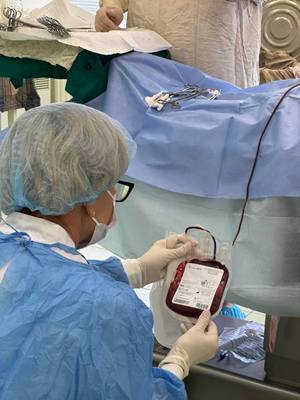
Congenital heart defects (CHD) are the most common congenital malformation in children. Those cases which require corrective surgery shortly after birth are normally diagnosed during prenatal screening. This leads to a scenario where the surgery is planned in advance, and the application of the baby’s cord blood can also be planned in advance. It is believed that autologous cord blood is the best transfusion support for newborns undergoing any surgery, and it has been used as a transfusion during cardiac surgery since 20111. Even after cord clamping, it is feasible to collect enough autologous cord blood to support newborns undergoing surgery2. Yet, a survey of neonatal cardiac surgery centers in Europe finds that few are taking advantage of this indication for cord blood treatment3.
In recent years, an additional application of cord blood to neonatal cardiac surgery has emerged. A handful of clinical trials have delivered advanced cell therapies derived from cord blood during neonatal cardiac surgery, often by intramyocardial injection4-6.
In this article we remain focused on the traditional use of minimally manipulated autologous cord blood as a transfusion during cardiac surgery. The existence of cell therapies derived from cord blood supports the argument that cord blood has potential applications in cardiac therapy, but we want to delineate the argument for the easiest use case.
We argue that the use of the baby’s own cord blood to support recovery from heart defects is a story which family cord blood banks should tell more often. The odds of using cord blood nearly double when this clinical application is available. Below we describe how family cord blood banks can become more involved in neonatal cardiac therapies, so that they can take cord blood from bank to bedside.
The prevalence of congenital heart defects
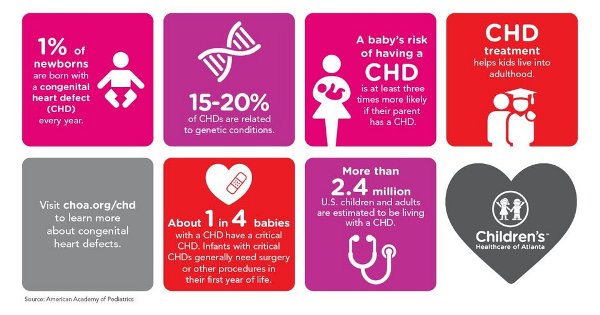
- It is often said that globally CHD occurs in 1% of newborns7. Recently, a more in-depth US survey shows CHD occurs in 2% of newborns8,9.
- Among that 2% of newborns, an estimated ~15% of cases require surgical intervention in infancy; complex cases require a series of surgeries over the first few months of life8.
- For comparison, the incidence of CHD requiring surgery (3 in 1000 newborns) is larger than the overall incidence of cerebral palsy (2 in 1000 newborns)10.
- Here is how these statistics apply to different countries:
- United States: ~3.6 million births/year → ~10,800 CHD surgeries/year.
- Germany: ~677,000 births/year → ~2,031 CHD surgeries/year.
- EU: ~3.7 million births/year → ~11,100 CHD surgeries/year.
The amount of cord blood experience to date
- Hundreds of neonatal cardiac surgeries have been performed to date using autologous whole cord blood as a transfusion11.
- The procedure was pioneered in Ukraine, where they have the largest clinical series covering a 15 year period11.
- More than a decade of follow-up is available for the earliest surgeries12.
- A published paper gives a five year comparison of children supported by cord blood against a control group of conventional surgeries13.
- This transfusion approach received national regulatory approval in Ukraine in 2012, becoming the first registered clinical application of autologous whole cord blood for neonatal cardiac surgery14.
- Only a handful of centers worldwide currently perform the procedure of using a cord blood transfusion to support the heart-lung bypass during surgery. These locations include Kyiv, Ukraine; New Delhi, India; Seoul, South Korea; and Melbourne, Australia.
Changing the narrative of cord blood banking
 For more than two decades, the private cord blood banking industry has been built on a single promise: preserve biological material today for therapeutic use that may come tomorrow. That promise has built a global market, but the industry itself has changed surprisingly little. Most family banks still earn their revenue almost entirely from storage, while real clinical integration of cord blood into mainstream medicine has advanced far more slowly than anyone predicted in the late 1990s.
Currently, family cord blood banks boast about the size of their inventory and market, rather than their clinical utility. Neonatal cardiac therapy could shift the competition from storage numbers to clinical cases.
Neonatal cardiac therapy is one of the largest and most predictable clinical settings in which autologous cord blood can already be incorporated into routine care. Unlike advanced cell therapies, this approach uses minimally manipulated cord blood, avoiding many of the manufacturing and regulatory complexities associated with advanced therapy medicinal products (ATMPs).
Prenatal diagnosis, planned delivery, planned surgery, and availability of autologous cord blood create a unique clinical pathway in which cord blood can move from storage into systematic therapeutic use. Few other applications combine all of these elements.
Building a new regulatory pathway in Germany
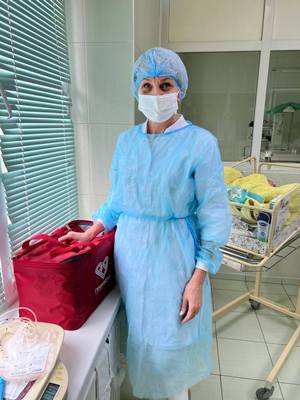 A Germany-based consortium is establishing the foundations required to bring autologous umbilical cord blood into routine clinical practice for neonatal surgery. This includes completion of a GMP manufacturing facility, ongoing regulatory interactions at both regional and federal levels, development of standardized production and quality systems, product characterization, and clinical work aimed at supporting future marketing authorization under Section 21a AMG (blood and stem cell preparations) of the German Medicinal Products Act. It is planned to follow this with a European market registration. We will refer to the validated regulatory pathway being built by the consortium as the “framework”.
The idea of using whole cord blood as a transfusion during surgery is not an intellectual property that can be patented. But the regulatory approval for the German market will create value by providing a framework for widespread clinical applications. Once such a framework exists, the logistics and clinical-integration know-how can be applied at any clinical center worldwide.
The current partners in this endeavor are the cord blood bank Hemafund Europe (biotechnology group with origins in Kyiv, Ukraine, now based outside Berlin), German biotech partners at the Berlin Institute of Health (BIH), and German clinical collaborators connected to Charité – Universitätsmedizin Berlin and the German Heart Center of the Charité (DHZC).
The objectives of the consortium extend beyond obtaining a German/EU marketing authorization for a single product. The long-term goal is to establish framework that can be reproduced by regional cord blood banks through their own local regulatory pathways. Germany serves as the reference model for the framework. In the long-term, this framework can be incrementally extended by evaluating therapy with cord blood components, include surgeries for additional congenital indications, and perhaps apply the approach to broader patient populations where there is a sound scientific rationale. These activities are straightforward extensions of the research roadmap.
Business-development framework
To support long-term commercialization and international expansion, the regulatory program is expected to be managed through a dedicated German entity. This company will hold the regulatory dossier, manufacturing protocol, clinical data package, and international licensing framework.
The German consortium is seeking partnerships with regional cord blood banks that will hold regional participation rights in the future product portfolio. Because the pharmaceutical marketing authorization is manufacturer-specific, international expansion is based not on transferring a single authorization, but on reproducing the established framework with qualified regional partners. Accordingly, several business models are possible:
- Distribution model. Hemafund Europe manufactures the product, while the regional partner holds the distribution authorization within its territory. This model is primarily applicable within Europe.
- Technology-transfer model. Hemafund Europe provides technology transfer, while the regional partner establishes its own manufacturing and marketing authorization using the framework developed in Germany. This model is applicable internationally.
- Regional limits. The framework is intended to be implemented through a limited number of regional partners in order to maintain harmonization of standards. Early participating partners may also contribute to future product extensions and additional clinical indications as the platform evolves.
Realistically, building this framework under the German regulatory sec. 21a AMG will require five to seven years effort and a low-eight-figure investment for the total enterprise. By joining forces with the German group, regional partners benefit from the foundational years and costs that are already invested, rather than starting a clinical program from scratch.
Inquiries
Neonatal cardiac therapy can only become a routine application of cord blood through collaboration between clinicians, regulators, and cord blood banks. Those institutions that are prepared to build the next chapter of cord blood applications together can make this transformation begin now.
To inquire about joining the partnership to develop the framework for neonatal cardiac therapy, please contact Yaroslav Issakov.
References
- Fedevych O, Chasovskyi K, Vorobiova G, Zhovnir V, Makarenko M, Kurkevych A, Maksymenko A, Yemets, I. Open cardiac surgery in the first hours of life using autologous umbilical cord blood. Eur. J. Cardio-Thoracic Surgery. 2011; 40(4):985–989.
- Nelson O, Jones R, Moldenhauer JS, Rintoul NE, Hedrick HL, Kumar S, ... Chou ST. Cord blood for autologous transfusion in infants with congenital anomalies: Volumes, sterility, and stability during storage. Transfusion. 2025; 65(3):539–550.
- Garcés-Sánchez S, Solaz-García Á, López-Guillén JL, et al. Use of Autologous Umbilical Cord Blood in Neonatal Cardiac Surgery: A European Survey of Current Practices and Perceptions. Pediatric Blood & Cancer. 2026; 73:e70009.
- Burkhart HM, Qureshi MY, Rossano JW, Peral SC, O'Leary PW, Hathcock M, Kremers W, Nelson TJ, the Wanek HLHS Consortium Clinical Pipeline. Autologous stem cell therapy for hypoplastic left heart syndrome: Safety and feasibility of intraoperative intramyocardial injections. J. Thoracic Cardiovascular Surgery. 2019; 158(6):1614-1623.
- Williams K, Khan A, Lee YS, Hare JM. Cell-based therapy to boost right ventricular function and cardiovascular performance in hypoplastic left heart syndrome: Current approaches and future directions. Seminars in Perinatology. 2023; 47(3):151725.
- Thayappa K, Bazarov A, Puwar G, Vasupalli SD, Dara MJ, Nasrallah J, Farooq T, Patel P. Stem cell therapy for hypoplastic left heart syndrome: a systematic review of efficacy, safety, and future directions. Egyptian Ped. Assoc. Gazette. 2025; 73:144.
- Liu Y, Chen S, Zuhlke L, Black GC, Choy MK, Li N, Keavney BD. Global birth prevalence of congenital heart defects 1970–2017: updated systematic review and meta-analysis of 260 studies. Intnl. J. Epidemiology. 2019; 48(2):455–463.
- Parker DM, Stabler ME, MacKenzie TA, Zimmerman MS, Shi X, Everett AD, Bucholz EM, Brown JR. Population-Based Estimates of the Prevalence of Children With Congenital Heart Disease and Associated Comorbidities in the United States. Circulation. 2024; 17(9):e0106576
- Williamson L. Congenital heart defect rates may be much higher than once thought. American Heart Association News. Published 2024-08-26
- Stavsky M, Mor O, Mastrolia SA, Greenbaum S, Than G, Erez O. Cerebral Palsy—Trends in Epidemiology and Recent Development in Prenatal Mechanisms of Disease, Treatment, and Prevention. Frontiers Pediatrics 2017; 5:21.
- Fernandez A, Chasovskyi K. The Use of Umbilical Cord Blood for Autologous Transfusion in Neonatal Open Heart Surgery. J Cardiothoracic and Vascular Anesthesia. 2020; 34(2):483-488.
- Maslova O, Chasovskiy K, Verter F. HEMAFUND CorD Program. Parent's Guide to Cord Blood Foundation Newsletter Published 2019-09
- Chasovskyi K, Mykychak Y, Rudenko N, Vorobyova H, Yemets I. Five-year experience with arterial switch operation in the first hours of life. Seminars in Thoracic and Cardiovascular Surgery. 2017; 29(1):70–76.
- Ministry of Health of Ukraine. Order No. 764. Management of Pregnancy and Delivery in Women with Prenatally Diagnosed Congenital Heart Defects of the Fetus. Kyiv: Ministry of Health of Ukraine; 2012.