
You are here
Cord Blood Banking in Paraguay
Overview of Paraguay
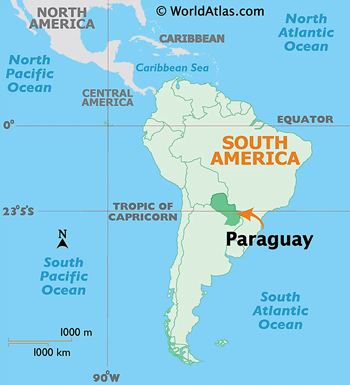 Paraguay is a landlocked South American country that is found between Argentina to the south, Bolivia to the northwest, and Brazil to the northeast. Paraguay is known as the "Heart of South America," famous for its bilingual culture, stunning waterfalls, and massive hydroelectric dams. About 10% of the population in Paraguay is located near the capital city Asunción.
Paraguay is a key member of Mercosur, an economic zone of free trade in South America that includes Argentina, Bolivia, Brazil, Paraguay, and Uruguay. Like many developing nations in Latin America, Paraguay has large economic disparities between the workers in cities versus the rural workers. In 2024 Paraguay had one of the fastest growing economies in the western hemisphere, driven by exports of beef, soybeans, minerals, and electricity.
The healthcare system in Paraguay has two tracks: a public sector that is funded by the Ministry of Health and a private sector for patients that can pay for insurance. The World Bank funds the Mother and Child Basic Health Insurance Program (MCBI) in Paraguay that provides access to improved support during childbirth and improved postpartum care for mother and child.
Protectia Paraguay
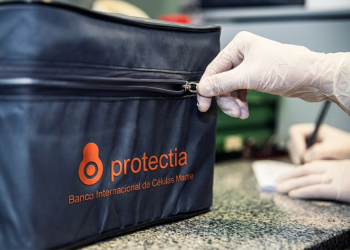 Paraguay has one cord blood bank, the family bank Protectia Paraguay that was established in Asunción in 2015. It is owned by the cord blood bank Protectia in Argentina, but Protectia Paraguay has its own laboratory, guaranteeing that cord blood samples are processed in the same country where they were collected.
With over 10 years of local trajectory, Protectia Paraguay is backed by more than 80 obstetricians performing collections, a network of over 40 healthcare institutions, and coverage from local and international health insurers.
The Protectia network of banks has a combined inventory of over 42,000 stored samples. Protectia banks have released samples for stem cell therapies at specialized centers abroad, including cell therapy for cerebral palsy.
Opening doors to cell therapy in Paraguay
The presence of the cord blood bank Protectia Paraguay is not only a business achievement, but also marks the country’s entry into a new era of healthcare within Mercosur. Paraguayan families have local access to the infrastructure needed to preserve the biological material that forms the foundation of regenerative medicine.
Today, the approach to umbilical cord blood and cord tissue banking has evolved: beyond treating hematological diseases, perinatal cell therapies are now central to protocols aimed at reducing neuroinflammation from brain injury. International studies have shown improvements in motor skills, communication, and behavior for patients treated with cell therapy.
Protectia banks have already provided cord blood samples to treat clients’ children with cerebral palsy. Looking forward, it is hoped that Protectia Paraguay can provide local families with cell therapy for autism spectrum disorder, which is estimated to effect 1 in 50 individuals in Paraguay.
MSC in the “Cradle of Football”
 It is believed that the indigenous people of Paraguay were the first to invent the sport now known as football or soccer. The headquarters of the South American Football Confederation (CONMEBOL) are located in Luque, Paraguay, a suburb of the capital city, Asunción. This status as the cradle of sports and football in South America has created a market in Paraguay for sports therapies that employ Mesenchymal Stromal Cells, known as MSC.
The ability to preserve MSC from umbilical cord tissue enables athletes and citizens alike to have their own repair resource to regenerate cartilage and bone injuries, avoiding complex surgeries and ensuring a natural biological recovery.
From Scientific Theory to Local Reality
Preserving cord blood and cord tissue at birth is no longer a promise for the future; it is an active decision by families who choose to access cutting edge medicine today. Paraguay now has the local scientific rigor to ensure that families do not miss this unique opportunity at birth. With Protectia, Paraguay positions itself at the forefront of scientific advancement, ensuring that the biological heritage of its children becomes a key to lifelong well-being.