You are here

Why Newborns Need the Hepatitis-B Vaccine
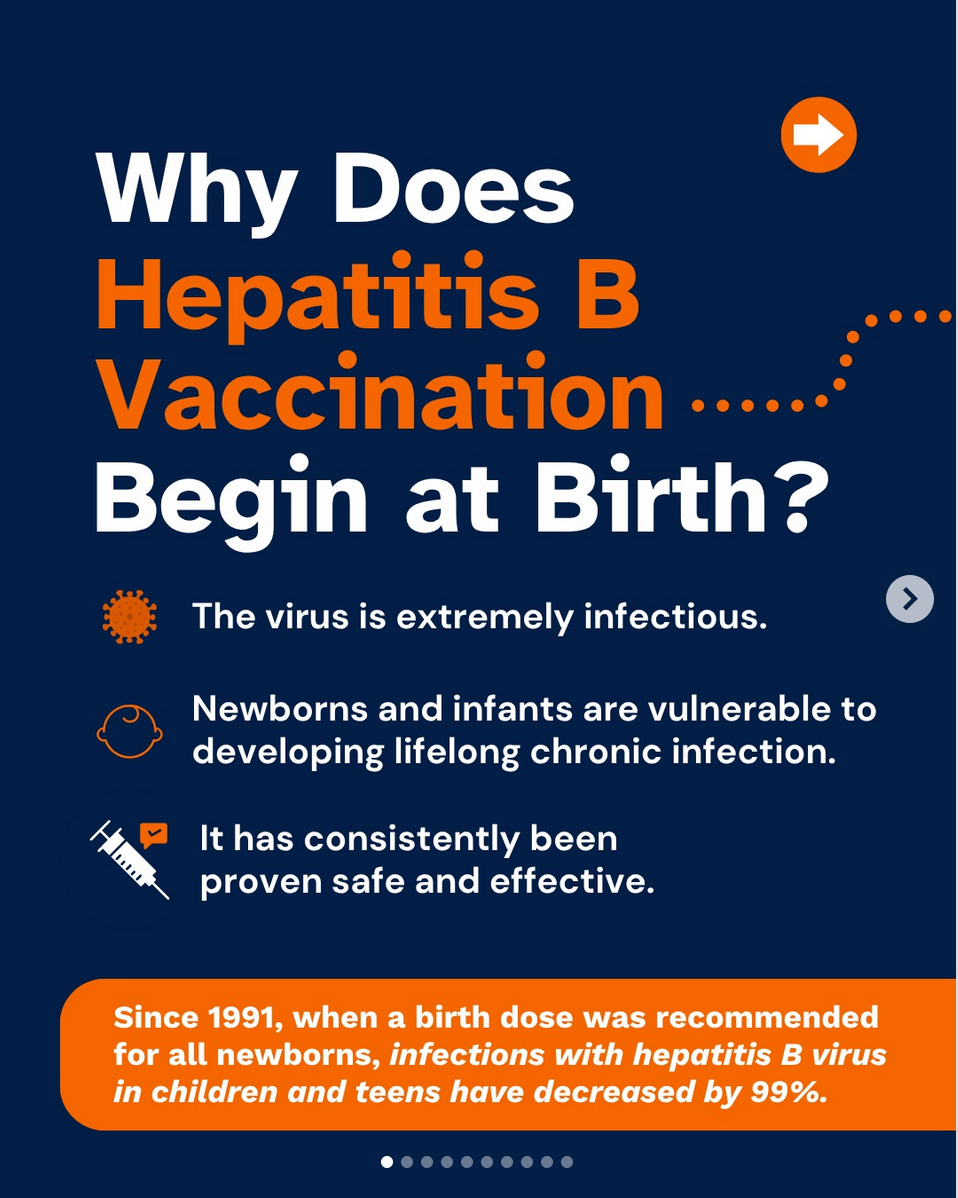
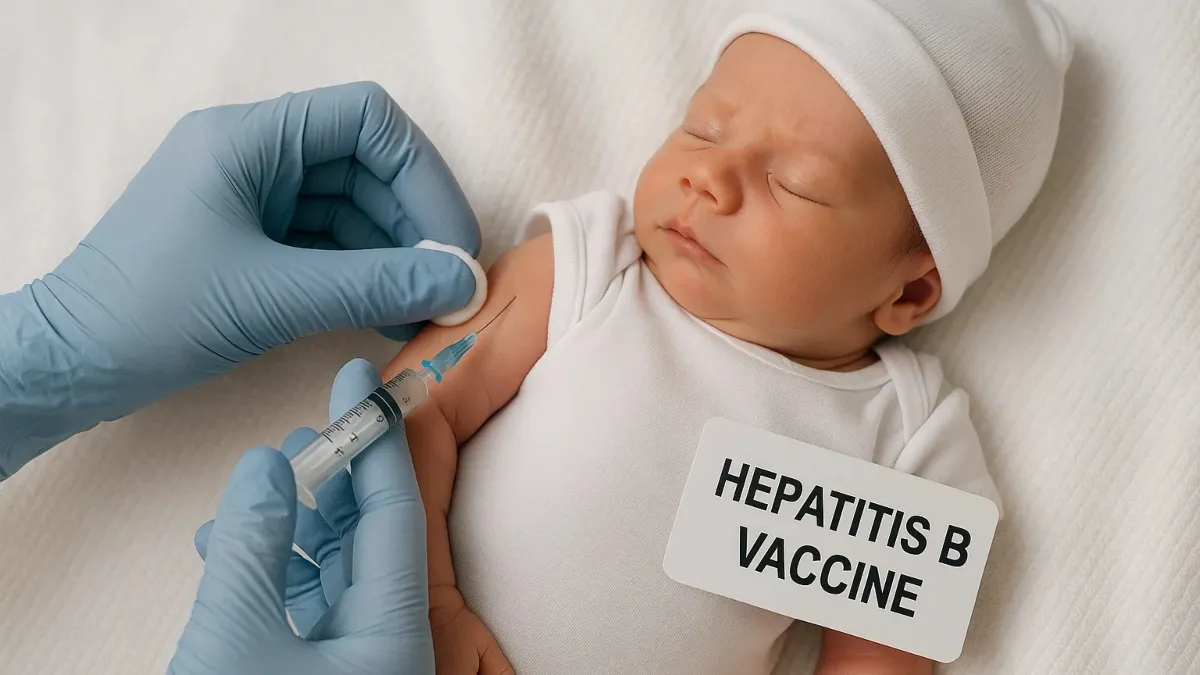
Since 1991, the vaccine against Hepatitis-B virus (Hep-B) has been given to all newborns in the United States within 12 hours of birth1-4. This practice was adopted because when an infant catches Hep-B, the consequences are often dire. Almost 90% of infants that become infected with Hep-B develop a chronic infection, and 25% of those chronic infections lead to early death1-5. Waiting even two months to give this vaccine exposes the newborn to the risk of catching Hep-B from a family member or a caregiver6.
 Facts about Hepatitis-B:
- Hep-B is a liver disease caused by the Hepatitis-B virus1-3.
- Hep-B is the leading cause of liver cancer worldwide2.
- Hep-B can be prevented by a vaccine, but once a person is infected there is NO CURE for Hep-B1. The Hep-B infection can be suppressed by taking anti-viral drugs for life, but this is not a cure1,5.
- Hep-B is transmitted by contact with an infected person’s blood or body fluids. One way to catch Hep-B is sexual contact, but you can also catch Hep-B just by sharing a toothbrush or a razor1.
- The virus for Hep-B does not spread through the air, but it can survive on surfaces for a week2,3.
- Up to 2.5 million people in the US have chronic Hep-B1,3,6.
- Up to 2 out of 3 people living with chronic Hep-B in the US do not know that they are infected, but they can still spread the virus to others3.
- Expectant mothers should be screened for Hep-B, but 1 in 7 are not tested in the US, and less than half of those who test positive receive follow-up care7,8.
- Almost 9 out of 10 infants that get infected with Hep-B develop a chronic infection2,4.
- Chronic Hep-B infections lead to liver cirrhosis in 4 out of 10 patients3.
- Among infants that develop chronic Hep-B, up to 1 in 4 will eventually die from liver failure or liver cancer2,4.
It is important for parents to understand the significant differences between Hep-B and other serious childhood illnesses.
The major difference is the life-long impact of catching Hep-B. A counter example would be the virus that causes Measles. If your child catches the Measles, the chances of dying from Measles is 0.3%, and the chance of developing post-Measles encephalitis is 0.1%9. Whereas, when an infant catches Hep-B, they have a 90% chance of having a chronic illness for the rest of their life, and having their life shortened by that illness.
Another difference is that the risk of catching Hep-B is always present. You can try to avoid the Measles by staying away from outbreaks. Whereas, the prevalence of Hep-B is near 10% in some US communities, and more than half of the infected people do not even realize they are carriers1,3,6. When you leave your child with a babysitter, you can’t really be sure that person is not a carrier of Hep-B.
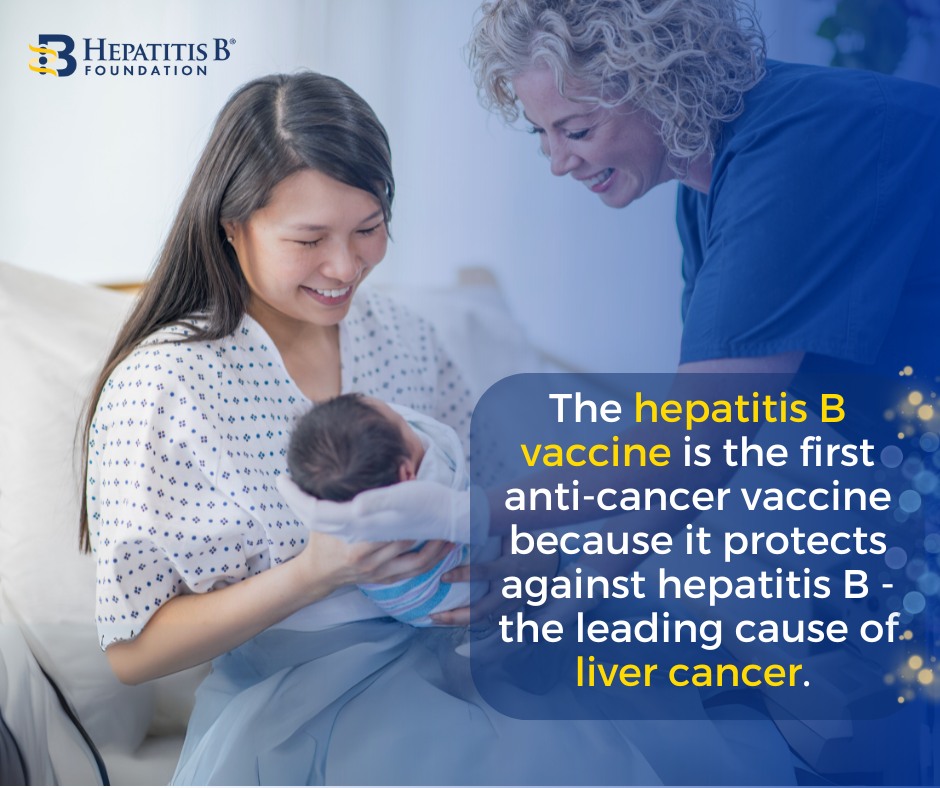 The American Academy of Pediatrics (AAP) recommends Hep-B vaccination for all newborns4. Since that policy was adopted in 1991, infections with Hep-B in children and teens have decreased by 99%2,4. Adults are also encouraged to get the Hep-B vaccine if they did not have it as a child, although public awareness of this guidance is low3.
Parents may have heard that, in January 2026, the CDC announced that newborns only need the Hep-B vaccine if the mother is infected10. This is a return to a failed health policy that was abandoned in 1991. Public health experts and over 200 medical professional societies urge parents to continue giving newborns the Hep-B vaccine shortly after birth, before going home from the hospital11.
Parents may also have heard that, in Denmark newborns do not routinely get the Hep-B vaccine, and things turn out just fine. To understand that claim, we need to review public health policy in Denmark.
 Denmark is a small Nordic country with a land mass that is comparable to the upper peninsula of Michigan, and a population of 6 million that is comparable to Wisconsin. There are many differences between the healthcare systems in the US versus Denmark12. Most notably, Denmark has free universal healthcare, a national health registry, a national vaccination registry, and digital surveillance networks to track disease outbreaks and follow up with patients13,14. In Denmark, very few people skip tests or treatments, and if someone does skip something the national networks will contact them. Whereas, in the US we have a patchwork of health insurance plans that do not cover everyone, there is no national registry following citizens’ health, and over 120 million Americans live in “healthcare deserts” where they “lack adequate access to and infrastructure for healthcare services”15,16. Given these disparities, suggesting that the US should adopt a vaccine policy that works in Denmark is absurd.
New parents should follow the guidance from the American Academy of Pediatrics and give their newborn the Hep-B vaccination as soon as possible4,17.
References
- Hepatitis B Foundation. Hepatitis B Facts and Figures. Accessed 2026-01-23 (see also: Hep B Birth Dose Media Toolkit)
- Rosen A. Hepatitis B Vaccination is an Essential Safety Net for Newborns. Office of External Affairs at the Johns Hopkins Bloomberg School of Public Health. Published 2025-09-24
- National Foundation for Infectious Diseases. Hepatitis B: Are You at Risk? News and Updates. Published 2018-11-03
- American Academy of Pediatrics. Hepatitis B Vaccine Given to Newborns Reduces Risk of Chronic Infection. Fact Checked. Last updated 2025-06-25
- World Health Organization. Hepatitis B. Fact sheet. Published 2025-07-23
- Lim J, Nguyen MH, Kim WR, Gish R, Perumalswami P, Jacobson IM. Prevalence of Chronic Hepatitis B Virus Infection in the United States. Amer. J. Gastroenterology. 2020; 115(9):1429-1438.
- U.S. Preventive Services TASK FORCE. Hepatitis B Virus Infection in Pregnant Women: Screening. Final Recommendation Statement. JAMA. 2019; 322(4):349-354.
- Hang Pham TT, Nimisha M, Cheng V, ... So S. Gaps in Prenatal Hepatitis B Screening and Management of HBsAg Positive Pregnant Persons in the U.S., 2015–2020. Amer. J. Preventive Medicine. 2023; 65(1):52-59.
- Rosebush J. How dangerous is a measles outbreak? UChicago Medicine Pediatrics News. Published 2025-05-13
- Verter F. Changes to Childhood Vaccines in the US. Parent's Guide to Cord Blood Foundation Newsletter. Published 2026-02
- Infectious Diseases Society of America. IDSA and over 200 health organizations urge Congress to conduct oversight of changes to vaccine schedule. Petition. Last Updated 2026-01-09
- Godoy M. Should the U.S. model its vaccine policy on Denmark's? Experts say we're nothing alike. National Public Radio. Published 2025-12-26
- Finnegan G. How the Danish Vaccination Registry became a cornerstone of Denmark’s immunisation service. Vaccines Today. Published 2023-10-27
- Danish Ministry of Health Statens Serum Institut. Digital Infectious Disease Preparedness. Surveillance systems. Last updated 2025-07-17
- Carroll A. Rethinking Health Care from a Global Perspective: American Complexity. The Commonwealth Fund. Published 2024-05-16
- Nguyen A, Chase L. Mapping Healthcare Deserts: Over 80% of the Country Still Lacks Adequate Access to Healthcare. GoodRx. Published 2025-07-15
- McCreary J. U.S. Newborn Hepatitis B Vaccination Rates Plunge, Reversing Years of Gains. Medpage. Published 2026-02-23