
You are here
Founding the First Hybrid Cord Blood Bank and other Memories
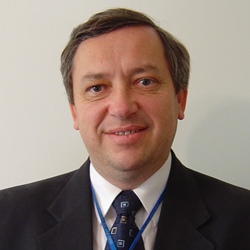 After 29 years, 11 months, and 3 days, the time has come to say goodbye. Effective 5 December 2025, Zbigniew “Roger” Mrowiec, PhD, has retired from serving as Laboratory Director of the cell therapy facilities at Vitalant New Jersey (originally known as Community Blood Services). Under Roger’s leadership, the lab was responsible for many firsts. This memoir tells those stories so that the record will not be lost.
“I began working at Community Blood Services (CBS) on January 2, 1996. In mid-1995, Dr. Parviz Lalezari — then President and CEO of Bergen Community Regional Blood Center / Community Blood Services—approached me with an offer to help establish a new Stem Cell Laboratory. Having started my career in 1982 at the Institute of Hematology in Warsaw, Poland, I was excited by the opportunity to return to the field of blood banking and enthusiastically accepted the offer.”
1996: Founding the First Hybrid Cord Blood Bank
 “Together with my colleague, Dr. Manoochehr Khorshidi, we started the Stem Cell Laboratory at CBS. Initially, we hoped to begin the collection, processing, and cryopreservation of Peripheral Blood Stem Cells (PBSC). Unfortunately, surrounding hospitals like Hackensack Medical Center and Saint Joseph Medical Center weren't interested in outsourcing this activity to us.”
In 1996 the era of cord blood transplants was just dawning. The world’s first cord blood transplant was performed in Paris in 1988, and the first transplant in the United States took place in 1993. “This was when Cord Blood (CB) became an interesting source of graft for patients needing a Bone Marrow Transplantation. However, the concept of building a Cord Blood laboratory was initially rejected by the CBS Board of Trustees. It was the beginning of Cord Blood banking, and the future of it wasn't yet clear. Some even suggested that 40–50 thousand units in inventory would support the entire world.”
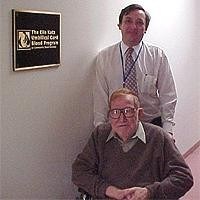
 “I had a different opinion and suggested starting the program to diversify Blood Bank activities. Dr. Elie Katz, who was the Chairman of the board at that time, became my best ally and convinced the rest of the board members to give us a chance. The Board asked how I would support this activity, and I suggested we could start by offering private banking to NJ residents while slowly building an inventory of public units."
"The Board eventually accepted this plan, and in 1996, we became the world's first hybrid cord blood bank.” The original name of the program was The Elie Katz Umbilical Cord Blood Program at Community Blood Services.
1996: Developing Cord Blood Processing Protocols
“It was not an easy ride. First, we had to write all the Standard Operating Procedures (SOPs) and learn how to collect and process the units. There were no standards focused on Hematopoietic Stem Cells (HPC) at that time, so we adopted Blood Banking standards.”
“In those early months, I sought to arrange a visit to the NY Blood Center, which had established its National Cord Blood Program in 1993 under the leadership of Dr. Pablo Rubinstein. Due to his demanding schedule, however, we were unable to successfully coordinate a visit in time. Recognizing the urgency, I reached out in September 1996 to Dr. Jeffrey McCullough, who directed a Cord Blood Program at the University of Minnesota and served as the Chief Editor of Transfusion. After just one phone call, I was on a flight to Minneapolis, where Dr. McCullough personally demonstrated how to collect and process Umbilical Cord Blood (UCB).”
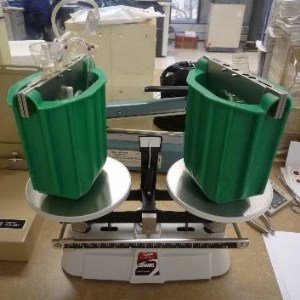 “After returning to our lab in Paramus, NJ, I started the collection and processing of UCB. Initially, we used the method proposed by Dr. Pablo Rubinstein. However, based on my long experience with buffy coat platelets, I modified the method and developed a centrifugation tool. This modification allowed us to recover, on average, 85% of the cells with a much less red cell contaminated product (5–8% Hematocrit, compared to the original method's 35–40% Hematocrit).”
“It took almost a year to finalize all processes and SOPs, but by the end of 1996, on November 16, we performed our first autologous collection. In the beginning, I was on call 24/7, assisting with collections at St. Joseph, Valley Hospital, or Holy Name whenever a delivery occurred. Sometimes, I was trapped in the delivery room for 6–7 hours with my wife and daughter waiting in the car—it sounds crazy, but that's what you call passion.”
“In September 1998, we signed an agreement with the Bone Marrow Donor Worldwide registry in Holland.” (BMDW now operates under the umbrella of the World Marrow Donor Association.) “From that moment, all our Allogeneic Cord Blood Units became available for search and distribution. We shipped our first UCB unit to the Fred Hutchinson Research Center in December 1998, which was a very emotional moment for all of us.”
As of November 2025, the cord blood bank (now known as Vitalant New Jersey) has banked over 8,200 Allogeneic Cord Blood Units and shipped 437 Umbilical Cord Blood Units to transplant centers worldwide.
1999: Accreditation
“In August 1999, we applied for Foundation for the Accreditation of Cellular Therapy (FACT) accreditation, as it was the first organization to introduce Cellular Therapy Standards. Unfortunately, FACT was not ready to inspect Cord Blood Banks at that time, and it took another five years for them to offer inspections. Sadly, our application was declined by the Accreditation Committee because of our private Cord Blood banking activity. We attempted to communicate with Dr. Phyllis Warkentin and Dr. E.J. Shpall, but the decision was final, which remains one of my biggest disappointments. Ironically, a few months later, another private Cord Blood bank was approved.”
“Because our feelings were hurt, we decided to stick with AABB (Association for the Advancement of Blood and Biotherapies). We applied for AABB accreditation instead and, in November 1999, passed the initial assessment, officially becoming an AABB-accredited facility.”
2000: FDA Inspection
“In May 2000, tragedy struck when an FDA inspection found 483 violations at Community Blood Services.” A ‘483 violation’ is a practice that FDA inspectors deem objectionable, and they are listed on Form 483. These are significant deviations from proper procedure which the laboratory must promptly correct, or else the FDA will escalate to a Warning Letter.
“It was a terrifying moment, and we thought it was the end. However, we were informed that the Cord Blood Department's operation was not suspended. Sadly, the majority of the Blood Bank staff were laid off, and only a number of managers and directors remained to correct the errors.”
“We were fortunate that Dr. Dennis Todd, who had accepted the CEO position just before the FDA visit but had not yet taken office, decided to come on board anyway and rebuild the operation. He risked his career to do something many people had given up on. Over the next couple of months, we had daily meetings and gradually restored operations. I believe the Cord Blood Department played a very important role in at least partially supporting the blood bank financially.”
1998 - 2025: Third-Party Banking
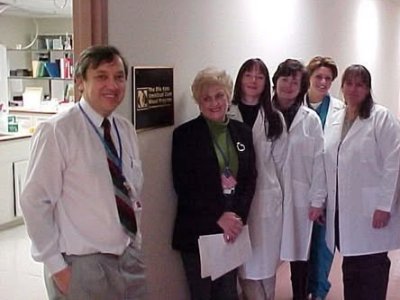 “In August 1998, we were approached by a company named LifebankUSA with an opportunity to process their UCB in our laboratory, which became the third arm of our operation. Our collection and processing of public UCB units gradually increased. The revenue from processing private and third-party units generated enough income to cover the department's growing expenses. We began hiring staff to perform collections in different hospitals and lab technicians to help process the units.” However, after the disastrous FDA inspection in May 2000, “LifeBankUSA felt our operation could jeopardize their business, and they moved their operation to their own laboratory in Cedar Knolls, NJ, in August 2000.“
“As the saying goes, nature does not accept a vacuum. We were lucky again when another private Cord Blood bank, Corcell, outsourced their processing and storage activity to us. They separated their operation from Coriell Institute in Camden, NJ, and our laboratory started processing their units in August 2000.”
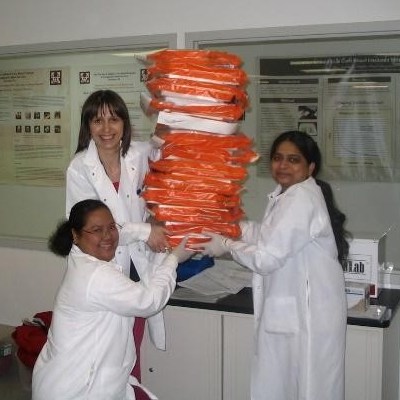 “Since then, we have been approached by many organizations, providing them with processing and cryo-storage services.” Often, CBS provided processing services for marketing companies that never acquired their own laboratory. Sometimes, CBS provided services for start-up companies that later built their own laboratory. And CBS has acquired the long-term storage inventory of companies that shut their laboratory. This list is not comprehensive, but these third-party clients included “AlphaCord, America Cell Bank, Americord, Anja Health, CellMed Biotech, Cord Blood America, CorCell, Cord Partners, CordTrack, Core23 BioBank, Cryobank for Oncologic and Reproductive Donors (CORD), CureSource, FamiCord, HemaStem Therapeutics, Mayfield Clinic, MAZE, NeoCells, New England Cord Blood Bank, New Hope, NuvaCord, Reproductive Genetics Institute, Safetycord, Safetycord USA, Securacell, Stem Cell Authority, and Stork Medical.”
Over the years, as private cord blood banks began offering cord tissue storage in addition to cord blood, CBS had to develop tissue storage protocols in order to retain third-party storage clients. In June 2012, "one of our third-party clients, MAZE, contracted with us to process tissue as an explant and store it for their clients.”
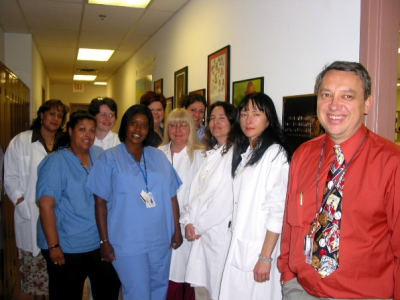 In January 2019, the lab started a contract for Americord, providing processing of “their Cord Blood, Cord Tissue, and Placental tissue. Placental tissue was new to us; we had to learn how to process it, extract the amnion, cut it into pieces, and cryopreserve it. We performed validation and wrote the SOP. I believe we were one of the first laboratories to offer this service, and it was a key factor in the negotiations. Our processing volume jumped drastically, and the revenue was nice too. Unfortunately for us, in 2021, Americord decided to open its own laboratory in New York.”
“Then, in January 2022, we signed another contract with Anja Health, a company referred to us by Dr. Joanne Kurtzberg. In November 2024, the New England Cord Blood Bank approached us to outsource their Cord Blood and Cord Tissue processing to us as they were closing their Boston operation.”
2001: September 11
“And of course, everybody remembers September 11, 2001. The mobilization of donors and CBS staff, with police regulating traffic and the ShopRite parking lot fully packed, was chaos that we handled very well. We collected hundreds of units of blood but realized around noon that we had to stop and put donors on a call list in case more blood was needed. Donors were upset, but we convinced them it was the right thing; the most important thing was not to waste a drop of blood. If I remember correctly, we did not let any blood units expire at CBS.”
2004 – 2007: NMDP, ISBT, & New Jersey Cord Blood Bank
“The next step in our operation was to initiate collaboration with the National Marrow Donor Program (NMDP). We started the application in April 2004 and filed a complete set of documents in December of that year. NMDP performed an audit in February 2005, and in November 2005, we became an accredited facility, #172.”
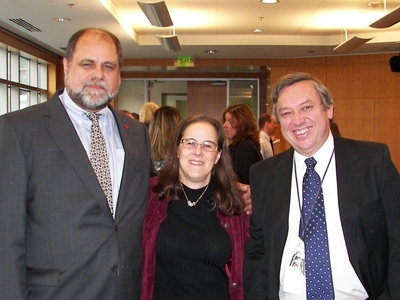 “In September 2005, following AABB recommendations, we decided to implement the ISBT 128 labeling format. We designed a set of barcodes that met AABB and ICCBBA standards and began labeling all our products. Then, in June 2006, we implemented an electronic database using the only available software at the time, StemSoft. I spent hours and hours talking to programmers with Misty Marchioni, one of my dedicated employees, and we eventually built the protocols we still use today.”
On 18 October 2005, the Governor of New Jersey created a NJ statewide public cord blood bank by Executive Order. This was the first state-wide public cord blood program in the nation. Initially, the NJ program gave a two-year grant to the stem cell processing laboratory at Community Blood Services, and also financially supported the Coriell Institute in Camden. As of 26 May 2007, the program became known as the New Jersey Cord Blood Bank. “Our previous name, The Elie Katz Umbilical Cord Blood Program, remained and represented our private/third-party operation.” Later, the Coriell Institute decided to shut down their operation, and their inventory was consolidated under the control of Community Blood Services.
2006: Semi-Automated Cord Blood Processing
“In 2006 we collaborated with BioSafe SA, a Swiss company that developed the automated instrument Sepax to process Umbilical Cord Blood Units. A validation study was launched between three banks: Community Blood Services, Carolinas Cord Blood Bank, and MD Anderson. On May 29, 2007, we became the first Cord Blood Bank in the US to adopt Sepax technology.” Subsequently, in 2016 Biosafe was acquired by GE Healthcare, and in 2020 Danaher Corporation acquired GE Healthcare and changed the name to Cytiva.
2006: Relocation from Paramus to Allendale
 “Also in 2006, due to our expansion and facility limitations at the Paramus Blood Center, the decision was made to relocate our operation from Linwood Avenue in Paramus, NJ, to Pearl Court, Allendale, NJ. After planning and building the new laboratory in Allendale, we moved our operation on July 17, 2006.”
“It was a huge logistical challenge to coordinate between live activity in the lab, with technicians from different companies who packed all instruments and 18 LN freezers on one site and reinstalled at the new location, but around midnight we were done. We performed tests on the flow and Sysmex instruments both in Paramus and then again in Allendale to ensure the results matched. And we finally had a 1,500-gallon Bulk Liquid Nitrogen (LN) Tank outside the building with vacuum pipes inside, solving our long struggle with LN supply.”
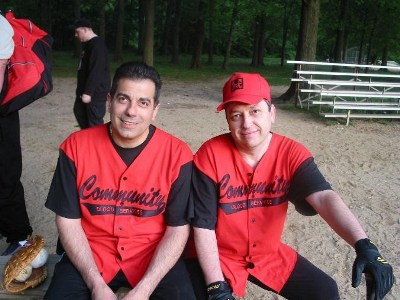
Although it was a busy time, the staff had so much team spirit that they also operated a softball team.
“Business was growing, and we were very busy. The staff grew to 24 lab technicians, a collection specialist, a delegated Quality Assurance representative, three supervisors, two administrative personnel, and our own delivery driver.”
2006 – 2007: Publication on Transient Warming Events
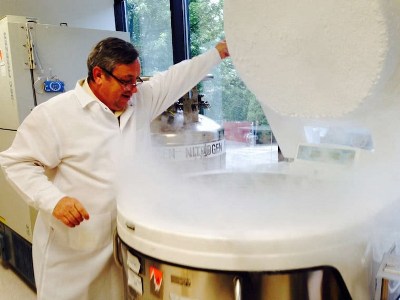 “During 2006-2007, we challenged the ‘urban legend’ of the ‘Transient Warming Event’ phenomenon.” At the time, it was widely believed in the cord blood field that even a minor TWE would cause irreparable harm to cryopreserved cord blood units. We conducted a study in which each UCB was split into two 25 mL samples that were processed and cryopreserved. The experimental sample was exposed 10 times to room temperature until reaching a target temperature of either -110oC or -80oC. Finally, samples were thawed and compared in terms of Total Nucleated Cell (TNC) count, Colony Forming Units (CFU), etc. It was found that none of the differences between experimental and control samples were statistically significant.
This study was important because it demonstrated that the very brief TWE which CBU experience during retrieval from storage are not detrimental to the units.
“The study was presented at the AABB annual meeting in Anaheim, CA, in 2007 and received a Gold Star for the best poster.” The resulting publication has been downloaded 3245 times.
2006 – 2019: HRSA grant
“But that is not all. In 2006, we worked very hard on an RFP from the Health Resources and Services Administration (HRSA) to participate in the National Cord Blood Inventory.” The HRSA grants were designed to promote the collection of racially diverse donations for the national cord blood inventory. “This was a true team effort led by Dr. Dennis Todd and Eva Yates. After submitting about 30 copies of an almost 500-page document, we waited for the answer. Unfortunately, it took two more applications until we were finally awarded a 10-year grant in September 2009.”
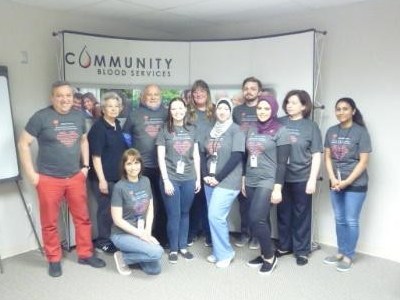 By 2009, the New Jersey Cord Blood Bank was collecting cord blood from 25 hospitals in New Jersey, 16 hospitals in New York, 2 hospitals in Delaware, and 1 hospital in Rhode Island. But in 2009 it became clear that NJ was running one of the largest state deficits in the nation and could not continue to support the public banking program. Despite the federal support from the HRSA grant, the NJCBB was forced to reduce the number of collection sites. In 2010, NJCBB eliminated all their collection sites in NY and cut back to 5 collection sites in NJ. In 2011 that list narrowed to 3 hospitals in NJ. Specifically, the collection centers were chosen to meet the HRSA requirement to expand the number of minority donors in the national cord blood inventory.
Under the HRSA grant, the public cord blood bank added 2,067 Umbilical Cord Blood Units for transplantation.
Community Blood Services had planned for some time to apply for an FDA BLA license. However, this application was so difficult that some public cord blood banks were spending over $4 million to be able to say that their cord blood units were a licensed FDA biologic. Due to this high cost, NJCBB “had to suspend this idea.” “Unfortunately, despite our efforts to receive FDA license for our UCB program, we stopped the process, and in consequences, HRSA did not extend our contract.”
2009 – 2012: Developing Cell Therapy Devices
“In early 2009, my dear friend Dr. Rouzbeh Taghizadeh", CSO at AuxoCell, and I collaborated on implementing his Umbilical Cord Tissue processing, expansion, and cryopreservation technology into our laboratory as a new offering to our clients. “In November 2009, his company sub-licensed us to process Allogenic Cord Tissue units for future clinical use.”
 “In the meantime, we worked with Roman Kuzyk from Cytotherm to validate his invention of the instrument to thaw cryopreserved products. The concept was to thaw frozen plasma, red cells, or cord blood without immersing bags in liquid. A completely dry system was a novel practice. I have seen his machines in many laboratories in the US.”
“In 2012, Sysmex invited us to validate their new instrument, the Sysmex XN-20 cell counter. The evaluation lasted over two months and included testing linearity, carryover, precision, and correlation against flow cytometry and the Sysmex XE-2100.”
“In June 2012, we introduced the Post-Thaw Report, designed to share post-thaw results of cord blood units with transplant centers before shipment. We have never received a complaint about the quality of the products we send, and I believe this is due to our commitment to transparency.”
2013: Relocation from Allendale to Montvale
“In 2012, Community Blood Services decided to consolidate our operation and rented a facility at 102 Chestnut Ridge Road in Montvale, NJ. Three facilities found a common space, and we prepared for another move. The laboratory was ready to move on March 19, 2013. This move was similar to 2006, except the LN bulk tank and freezers remained in Allendale; we only took one quarantine freezer to Montvale. We had to validate all processes and equipment after the move. “
“The biggest challenge was the twice-weekly transport of cryopreserved units and tissues from the processing lab in Montvale, packed in dry shippers, to the Allendale storage facility for restocking. The good part was that the Cord Blood Department joined our friends and colleagues from CBS under one roof.”
2018: Merger with ITxM and New Laboratory in Allendale
 “We ran the operation in Montvale until 2018. Dr. Todd worked hard to sustain our blood banking activity while many other New Jersey blood banks had to suspend their operations. Thanks to his efforts, we were approached by Blood Systems Inc. (BSI), which was consolidating smaller blood bank activities across the country. Eventually, CBS became part of this larger organization.“ BSI re-branded as Vitalant on September 24, 2018. Since they have multiple facilities in multiple states, CBS is now known as Vitalant New Jersey.
 “At the same time, it was decided to rebuild the laboratory in Allendale.” As part of their take-over of multiple blood banks, Vitalant analyzed which facilities should be consolidated. “Mr. Madhup Kothari, Vice President of Clinical Services Administration at Vitalant, was delegated to evaluate our operation and the Institute for Transfusion Medicine (ITxM) cord blood program in Chicago. The decision was made to keep our Cord Blood Program and absorb the inventory of ITxM units."
"Since the Chicago facility was closing, we were able to disassemble their laboratory benches, transfer them to Allendale, and set up a new lab. Madhup, Mary Wiegel, and I worked countless hours going over the ITxM inventory, selecting only a portion of the units, consolidating them into five freezers, and transferring them to Allendale. It was very hard work and a team effort, with everybody getting their hands dirty. It was also very emotional to dispose of many UCB units.”
“The move to the new Allendale laboratory on April 10, 2019, was different. Since our existing instruments like the Flow, Sysmex, and BactAlert were old, we purchased new models. Before physically moving from Montvale, we validated the new instruments and correlated the results with our old equipment. We never stopped processing, and though it was a long day, we got it done.”
2025: CAR-T
“In March 2025, after negotiations between Vitalant corporate management and Johnson & Johnson (J&J) for processing their Mononuclear Cell (MNC) collections for CAR T-cell manufacturing, we received our Tech Transfer training. Some of the Cord Blood staff had previously visited the Arizona Cellular Therapy Lab to standardize procedures and become familiar with the cryopreservation process. In August 2025, we began receiving the first MNC collections from J&J. By the end of October, all Cord Blood Department staff members had received their training.”
December 2025: Time to say goodbye
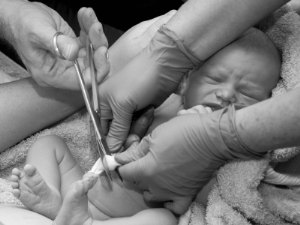 “There is a motto I have lived by my entire life: ‘Primum non nocere’ — First, do no harm. It is part of the Hippocratic Oath taken by doctors around the world after completing medical school. You can apply this principle to your entire life, both personal and professional."
"And remember: there are no more or less important jobs. We all work to serve people in need, and we all deserve the same level of respect. Be proud of what you do.”
“Finally, thank you to all my friends and colleagues who helped build this program. ‘It takes a village’ to create something like this. I have had the privilege of working with more than 276 talented employees (I’ve lost count by now). Some of them completed medical school or earned a PhD. Others advanced within our own organization, becoming Directors of QA, Directors of Operations, Managers, and even Vice Presidents. Many moved on to leadership positions at other organizations as managers and supervisors. I have been very lucky to have you by my side all these years. Now that the program is almost 30 years old, I believe I can finally cut the cord.”