Birth in my country
অটিজেমে কর্ডের রক্তের সাহাজ্যে চিকিৎসা - ডিউক ACT গবেষণার ফলাফল: পিতামাতাদের জন্য
ভূমিকা
 ড: ডঃ জোঅ্যান কার্টজবার্গ ও ডা: জেরালডিন ডসনের অধীনে ডীউক বিশ্ববিদ্যালয়ের গবেষকরা অটিস্টিক স্পেকট্রাম ডিসঅর্ডারে (এ এস ডি ) আক্রান্ত শিশুদের উপর কর্ড ব্লাড থেকে আহরিত স্টেম সেল প্রয়োগের উপর গবেষণারত ছিলেন।
প্রথম দিকের ডীউক এ বি সি গবেষণার ফলাফল ২০১৭ তে প্রকাশিত হয়েছিল, তাতে দেখগেছিল যে ২ – ৬ বছর বয়স্ক যেসব শিশুদের, তাদের নিজেদের কর্ডের রক্ত দিয়ে চিকিত্সা হয়েছিল, তাদের প্রায় ৭০% মধ্যে প্রভূত উন্নতি দেখা গেছিল, বিশেষভাবে তাদের মধ্যে, যাদের অমৌখিক আই কিউ ৭০ এর বেশী।
এই গবেষণার ফলাফলে অনুপ্রাণিত হয়ে ডীউক বিশ্ববিদ্যালয়ের গবেষকরা, দ্বিতীয় একটি গবেষণার সূচনা করেন যার নাম দেওয়া হয় ডীউক এ সি টি গবেষণা, এর ফলাফল ২০২০ র মে মাসে জার্নাল অফ পেডিয়াট্রিক্স এ প্রকাশিত হয় – এখানে তার সংক্ষিপ্তসার প্রকাশিত হল
ডিউক এ সি টি গবেষণার রূপরেখা
ডিউক এ সি টি গবেষণা – কর্ডের রক্তের ব্যাবহার করে চিকিতসা করে অটিজেমের মূল লক্ষণের কোন উন্নতি হয় কি না তা নির্ধারণের জন্য ড়্যায়ানডোময়াএজড, ডাবল ব্লাইন্ড , প্লাসীবো কনট্রোলড, প্রসপেক্টিভ, ক্রস-ওভার করে গবেষণা করা হবে ।
এই গবেষণাতে অন্তর্ভুক্ত হতে গেলে – সেই শিশুদের বয়স অবশ্যই ২ – ৭ বছরের মধ্যে হতে হবে, অটিজেমের ব্যাপারে ও সেটি কোন জন্মগত ও জীন ঘটিত কারণে হয়নি সেটা সম্পূর্ণ নিশ্চিত হতে হবে এবং ইংরেজী বোঝা ও কথা বলার ক্ষমতা থাকা আবশ্যক। আবেদনকারী শিশুদের বেশ কিছু পরীক্ষা করা হয়, যা টেলিফোন ও কম্পুটারের মাধ্যমে দূর থেকে এমনভাবে পরিচালিত করা হয় যাতে, যাদের অমৌখিক আই কিউ ৭০ এর বেশী, তারা অগ্রাধিকার পায় এই গবেষণাতে যোগদান করার।
এই গবেষণাতে ১৮০ জন অটিজেমে আক্রান্ত শিশুদের অন্তর্ভুক্ত করে ৩ টি বিভাগে ভাগ করা হয় কে কি ধরনের চিকিতসা পাবে তার উপরে নির্ভর করে ।
- "AUTOLOGOUS". ১) ৫৬ জন শিশুকে অটোলগাস বিভাগে অন্তর্ভুক্ত করা হয় – এই শিশুদের প্রথমবার ডীউকে পৌছলে, তাদের শরীরে নিজেদের কর্ডের রক্ত সঞ্চালন করা হয়। ৬ মাস পর দ্বিতীয় দফায় তাদের শরীরে প্লাসীবো সঞ্চালন করা হয়।
- "ALLOGENEIC". ২) ৬৩ জন শিশুকে অ্যালোজেনিক বিভাগে অন্তর্ভুক্ত করা হয় – এই শিশুদের প্রথমবার ডীউকে পৌছলে, তাদের শরীরে দান করা কর্ডের রক্তসঞ্চালন করা হয়, যার সেই শিশুর সঙ্গে অন্তত ৬ টি HLA‘র মধ্যে ৪ টিতে মিল আছে । ৬ মাস পর দ্বিতীয় দফায় তাদের শরীরে প্লাসীবো সঞ্চালন করা হয়।
- "PLACEBO". ৩) ৬১ জন শিশুকে প্লাসীবো বিভাগে অন্তর্ভুক্ত করা হয় - এই শিশুদের প্রথমবার ডীউকে পৌছলে, তাদের শরীরে প্লাসীবো সঞ্চালন করা হয়। ৬ মাস পর দ্বিতীয় দফায় যদি তাদের নিজেদের কর্ডের রক্ত রক্ষিত থাকে তাদের সেই রক্ত (অটোলগাস) এবং যাদের নিজেদের কর্ডের রক্ত রক্ষিত নেই তাদের শরীরে দান করা কর্ডের রক্তসঞ্চালন করা হয়, যার সেই শিশুর সঙ্গে অন্তত ৬ টি HLA‘র মধ্যে ৪ টিতে মিল আছে (অ্যালোজেনিক)।
এখানে এটি বিশেষ ভাবে লক্ষণীয় যে এই গবেষণাতে কেউই কর্ডের রক্ত থেকে বঞ্চিত হচ্ছে না, সে প্রথমে বা ৬ মাস পরে কর্ডের রক্ত পাচ্ছেই। এই জণ্য গবেষণাটি “ক্রস-ওভার” কারণ প্রথমে যারা কর্ডের রক্ত পেয়েছে তার ৬ মাস পরে প্লাসীবো বা প্রথমে যারা প্লাসীবো পেয়েছে, ৬ মাস পরে তারা পেয়েছে কর্ডের রক্ত। যেহেতু চিকিত্সক বা রুগী উভয়েই জানেন যে সে সঞ্চালনের সময়ে কি পাচ্ছে কর্ডের রক্ত না প্লাসীবো, তাই এই গবেষণাটি “ডাবল ব্লাইন্ড। এই সমীক্ষাটি এমনভাবে সাজানো হয়েছিল যাতে এই গবেষণাতে অন্তর্ভুক্ত শিশুদের তাদের বয়স ও আই কিউ এর নিরিখে সব বিভাগে সামঞ্জস্যপূর্ণ ভাবে সব বিভাগে বন্টিত থাকে।
এই গবেষণাতে অন্তর্ভুক্ত শিশুদের ও তাদের পরিবার কে ডীউক বিশ্ববিদ্যালয়ে আসতে হয়েছিল এবং তার এই চিকিতসা আউটডোরের রুগী হিসাবে প্রদান করা হয়। প্রত্যেককে তিনবার ডীউক বিশ্ববিদ্যালয়ে আসতে হয়েছিল, প্রাথমিক চিকিতসা, ৬ মাস পরে দ্বিতীয় দফার চিকিতসা ও ১ বছর পরে চূড়ান্ত পরীক্ষার জন্যে। প্রতিবার এই শিশুদের বেশ কিছু পরীক্ষা করা হয়, যেমন মস্তিষ্কের দক্ষতার পরীক্ষা, এবং মস্তিষ্কের কার্যকারিতা সম্পর্কিত সি টি ও এম আর আই স্কান ও করা হয়।
গবেষণার ফলাফল
এই গবেষণাতে অংশগ্রহণকারী কোন শিশুর শরীরে কোন রকম কঠিন পার্শ্ব -প্রতিক্রিয়া দেখা যায়নি। ৫% শিশুর মধ্যে চুলকানি, কাশি অথবা শ্বাসের কষ্ট হয়েছিল। এই চিকিত্সার প্রথম কয়েক সপ্তাহে শিশু ও তাদের পরিবারের মধ্যে বিশেষ উদ্বিগ্নতা লক্ষ্য করা গেছিল য ৪০ – ৫০% এর মধ্যে মানসিক অসুস্থতার পর্যায়ে পৌছেছিল।
যদিও এই শিশুদের প্রচুর সাধারণ পরিক্ষা থেকে সি টি ও এম আর আই স্কান পর্যন্ত করান হয়, এই গবেষণাটির রূপরেখা শুধুমাত্র একটিমাত্র প্রশ্নের উত্তর দেবার মতো করে তৈরি করা হয় “কর্ডের রক্ত সঞ্চালনের ফলে অটিজেমে আক্রান্ত শিশুদের সমাজিকতার ভিত্তিতে ভাইনল্যান্ড আয়ডাপটিভ বীহেভিয়ারের তৃতীয় সূচক (ভি এ বী স - ৩) অনুযাই কোন শুভ পরিবর্তন দেখা গিয়েছিল কি? – উত্তর হবে, সামগ্রিক ভাবে এই সূচকের নিরিখে কোন শুভ পরিবর্তন দেখা যায়নি। ডিউক এ সি টি গবেষণায় ভয়বস -৩ অনুসারে, কর্ডের রক্ত ব্যাবহারের সঙ্গে প্লাসীবো ব্যাবহার করে চিকিতসার কোন সুবিধা পাওয়া যায়নি। এই চিকিতসা চলাকালীন বেশ কিছু অবাঞ্ছিত অসুবিধার সম্মুখীন হতে হয় গবেষকদের যা মূল গবেষণার রূপরেখাকে দুর্বল করেছে।
ডিউক এ সি টি গবেষণায় যে সদর্থক ফল পাওয়া গেছে তা হল – কিছু শিশুদের মধ্যে সুক্ষ ভাবে দেখলে তাদের ব্যবহারে কর্ডের রক্তের চিকিত্সার পরে কিছু উন্নতি লক্ষ করা গেছে, প্লাসিবোর সঙ্গে তুলনা করলে। যাদের বয়স এবং আই কিউ তুলনামূলকভাবে বেশী তাদের মধ্যে পারস্পরিক আদানপ্রদান (ভয়বস -৩), মণসংযোগ এবং মস্তিষ্কের ঈ ঈ জি তে স্নায়ুর সংযোগ বেশী পরিলক্ষিত হয়েছে। এই উন্নতির সূচক যারা নিজের বা দান করা কর্ডের রক্ত পেয়েছে দুজনের মধ্যেই সমান।
গবেষণার অসুবিধা
ডিউক এ সি টি গবেষণায় কিছু অসুবিধার সম্মুখীন হয়েছিল যাতে তাদের কর্ডের রক্ত প্রাপক দের মধ্যে যে বেশী উন্নতি হয়েছে তা প্রমাণ করতে অসুবিধে হয়।
যেহেতু বেশ কিছু পরীক্ষা দূর থেকে করতে হয়েছে, যেমন আই কিউ টেস্ট , তাই হয়তো কিছু সুক্ষ তারতম্য অনুধাবন করা যায় নি। যেখানে ১৮০ জন শিশুদের মধ্যে করা হয়েছে তাদের মধ্যে অন্তত ১৪৩ জনের অমৌখিক আই কিউ ৭০ এর বেশী হলে ভাল হতো, কিন্তু মাত্র ১০১ জনকে সামিল করা গেছিল যার জন্যে ফলাফলে কিছু তারতম্য হয়ে থাকতে পারে । এই কারণে গবেষকদের আরও ভাগ করে সুক্ষ ভাবে খুজতে হয় ফলাফল দেখার জণ্য।
এ সি টি গবেষণায় আরো একটি অসুবিধা লক্ষ করা গেছিল, শিশুদের উন্নতির সূচক প্লাসিবো বিভাগে আশাতিরিক্ত ভাবে বেশী হয়ে যায়, যার জন্য যাদের শরীরে কর্ডের রক্ত সঞ্চালন করা হয়েছিল এবং তার উন্নতি কিছুতেই ঠিক ভাবে দেখানো যায়নি। যদিও এই দুই বিভাগের মধ্যে একটিই তফাত ছিল, একটি বিভাগ অন্য বিভাগের থেকে ৬ মাস পরে কর্ডের রক্ত পেয়েছিল ।
উপসংহার ও পরবর্তী পদক্ষেপ
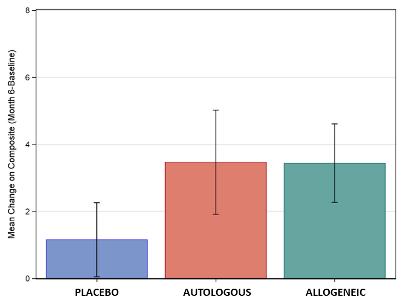 এই গ্রাফ উন্নতির সূচক দেখা যাচ্ছে - পারস্পরিক আদানপ্রদান, মণসংযোগের উপর চিকিত্সার তিনটি বিভাগের ফলাফল, যে সব শিশুদের অমৌখিক আই কিউ ৭০ এর বেশী। ফলাফলের বিশেষ তফাত লক্ষ্য করা গেছে যারা কর্ডের রক্ত পেয়েছে ও যারা প্লাসিবো পেয়েছে তাদের তুলনায় কিন্তু অটোলগাস ও আয়ালজেনিক কর্ডের চিকিত্সার মধ্যে কোন বিশেষ তফাত হয়নি।
এই গবেষণা থেকে প্রাপ্ত জ্ঞান প্রয়োগ করে পরবর্তী গবেষণার রূপরেখা তৈরি করা হবে। ভবিষ্যতে, যে সব শিশুর সামনা সামনি বসে আই কিউ পরীক্ষাতে উত্তীর্ণ হবে শুধু তাদেরই ডিউকের অটিজেম সংক্রান্ত গবেষণাতে অংশগ্রহণ করতে দেওয়া হবে। এখনকার মত শুধু যাদের আই কিউ বেশী তাদের মধ্যই সীমাবদ্ধ থাকবে কারণ তাদের মধ্যে এই চিকিত্সায় যে উন্নতি হবেই তা প্রমাণিত। ভবিষ্যতে যেখানে আরও বেশী সংখক রোগী নিয়ে গবেষণা হবে সেখানে প্লাসিবোর প্রভাব কাটানোর জন্য অনেক বেশী সংখক পরীক্ষার্থীকে গবেষণার অন্তর্ভুক্ত করা হবে এবং উন্নতির সূচক হিসাবে পারস্পরিক ভাবের আদানপ্রদান ও সমাজিকতা কে ভ্যা ব স-৩ কে ব্যাবহার করা হবে।
ডিউক কিছু দিন আগে একটি ফেজ ২ রান্ডোমাইজড, প্লাসিবো নিয়ন্ত্রিত, ক্রসওভার, গবেষণা চিকিত্সার শুরু করেছে যাতে কর্ডের টীস্যুর থেকে আহরিত মেসেনকাইমাল স্টরোমাল কোষ ব্যাবহার করে অটিজম স্পেকট্রাম ডিসঅর্ডারের চিকিতসা করা হবে। এই গবেষণাতে এ সি টি গবেষণার ভুলের যাতে পুনরাবৃত্তি না হয় তার জন্য এই গবেষণাতে ৪ – ৮ বছর বয়স্ক ১৬৪ জন শিশুকে অন্তর্ভুক্ত করা হবে, যাদের অমৌখিক আই কিউ ৭০ এর বেশী।
এ সি টি গবেষণার আর্থিক অনুদান মার্কাস ফাউন্ডেশনের কাছ থেকে প্রাপ্ত। প্রত্যেক অংশগ্রহণকারীর আর্থিক খরচ ও পরিবারের যাতায়াতের খরচ এই অনুদান থেকে দেওয়া হয়েছিল।
ভাষান্তর – কর্ডলাইফ সাইন্সেস ইন্ডিয়া প্রাইভেট লিমিটেড