
Usted está aquí

Tariff Impacts on the Blood Supply
With the implementation of tariffs on many goods imported into the US since April 2025, impacts are starting to be felt in the cost of imported pharmaceuticals and medical devices1. It is important to untangle the ways that tariffs are intertwined with the production of blood products, because ultimately patient’s lives are impacted by any cost changes and any bottlenecks resulting from cost changes. Surprisingly, we have not seen any blogs about tariffs and blood yet, so we decided to jump on this topic and write an investigative report. Conveniently, the October meeting of the Association for the Advancement of Blood & Biotherapies (AABB) provided an opportunity to interview several experts in transfusion medicine.
As an example, if a blood product is imported into the US from Europe, it will be subject to a 15% tariff1. Does this scenario actually happen? This turns out to be a very complicated topic. It is complicated because there are many types of blood products, with some coming from a single donor, and others manufactured from thousands of donors. Looking at the more complex specialty products, you have to find out which company produces each blood product, and where they produce that blood product.
Products made from blood: Components versus Derivatives
For starters, the main thing to know is that in the world of blood banking there are two distinct groups of products made from blood: components and derivatives. Blood components are the major fractions of blood: the plasma, red blood cells, white blood cells, and platelets. Blood components are physically separated and transfused to a patient with minimal manipulation2-4. Blood derivatives are minor fractions derived from these components, particularly from plasma, through a process called fractionation. Blood derivatives are chemically processed and purified to isolate specific proteins, such as albumin or fibrinogen4.
Blood Components by volume | Blood Derivatives from Plasma |
Plasma | Albumin |
Red Blood Cells | Clotting Factors |
White Blood Cells (aka Leukocytes) | Cryoprecipitate |
Platelets | Immunoglobulins (aka Antibodies) |
All blood products are regulated in the US as biologics under the FDA Center for Biologics Evaluation and Research (CBER)5-7. While there is no ban on importing blood components, in practice blood components are normally sourced locally. For example, a cancer patient undergoing chemotherapy may need a transfusion of platelets. If possible, those platelets will come from a donor at a local blood bank. The main reason to distribute blood components locally is because they have a limited shelf life8. Shipments of blood components between countries requires additional safety testing, regulatory hurdles, and logistical challenges, which run up the operating costs of blood banks. Exceptions to the local rule can be made if a patient has unusual requirements. For example, blood from donors with rare antigen types is cryopreserved for years and made available to patients around the world9,10.
Blood derivatives made from plasma are more like pharmaceutical products. For example, a hemophilia patient needs to periodically receive specific clotting factors that are lacking in their blood due to a genetic disorder. Blood proteins, like clotting factors, are not concentrated in any one person’s blood, so they must be accumulated from multiple donors. Donations of plasma are usually collected with an apheresis machine which separates the donor’s blood to remove only the plasma component and returns the rest11. The apheresis process can collect about 650–750 milliliters of plasma per donor per session, whereas a 450 ml donation of whole blood only yields about 225 ml of plasma12. The production of plasma derivatives typically requires over ten thousand liters of plasma from over a thousand donors12. Consequently, these derivative products are manufactured at specialized laboratories. The pooled products are subjected to rigorous safety and sterility testing. In order to give them shelf life, these products are often lyophilized (freeze-dried) into a powder that can be reconstituted for delivery to a patient. Each company that is involved in the expensive business of producing plasma derivatives has a brand name for their FDA-approved product.
Blood plasma derivatives are a big business
The TV station CNBC has created a video documentary about the “big business” of exporting plasma. Blood plasma is a big business because the US produces 70% of the world’s blood plasma supply13. By the end of 2024, there were 1,234 clinics across the United States dedicated to collecting plasma donations14-18. In 2023, blood products were the 9th largest US export by value, worth USD 37 billion19. This means that the US generates more income from exporting plasma than it makes exporting coal or gold.
The vast majority of exported US plasma is sent to Europe, to laboratories that pool the plasma to manufacture fractionated products13. According to the CNBC video from 2022, 80% of the plasma donation centers in the US were owned by these four companies: Grifols, CSL Behring, Takeda’s BioLife, and Octapharma13. These are all multi-national companies with headquarters outside the US. This suggests that most plasma derivatives are manufactured overseas and then imported into the US.
The US market for buying fractionated plasma products was estimated to be USD 8.5 Billion in 2024, out of a global market of USD 36 Billion20-22. There are numerous industry reports about the plasma market, and it is hard to know which ones to believe, because you cannot examine their analysis methodology without buying the reports. The public abstracts of the reports all agree that immunoglobulins are the most expensive plasma product and dominate this market. There is a consensus among the reports that the market for plasma products is growing, due to aging populations and a rising burden of immunodeficiency disorders. The compound annual growth rate (CAGR) of the plasma derivative market is estimated to be about 8.5%, which means the global market will be near USD 80 Billion by 203422.
A review of the plasma industry reveals that most plasma collected in the US is shipped to Europe for fractionation. Then the US pays billions of dollars for plasma derivatives to treat US patients. This raises a burning question:
The cost of blood products is billed differently depending on whether the patient receives the blood product in an out-patient setting or an in-patient setting. To illustrate these concepts, we created two scenarios.
The first example is out-patient billing for blood derivates. In this scenario we imagine that the patient receives periodic infusions of intravenous immunoglobulin, known as IVIG23. This treatment may be prescribed for immune deficiencies, auto-immune disorders, or immune-mediated inflammatory disorders. The IVIG infusion is prepared at a specialty pharmacy and given to the patient at an out-patient infusion clinic or even in the patient’s home. In these outpatient settings, the cost of the plasma product is billed directly to the patient’s insurance company. The average cost of IVIG in 2024 was about $100/gram24. The total cost of treatment was $9,720 for a typical patient’s infusion in 201424. While most health insurance covers IVIG, the exact amount of coverage will vary depending on the insurer, on the patient’s specific diagnosis, and any prior authorization requirements. Sometimes patients that are receiving outpatient IVIG treatment have to battle their insurance company over the amount of coverage. The specialty pharmacies that prepare IVIG have websites offering patient help and financial assistance programs24,25.
The alternative example is inpatient billing for blood derivates. For this scenario we look at a patient that is receiving the clotting factor fibrinogen while undergoing surgery. Fibrinogen has FDA approval for acute bleeding in the context of congenital or acquired fibrinogen deficiency, and fibrinogen is usually administered in hospitals. There are two main pathways for manufacturing fibrinogen products from plasma; one is to use 10 whole blood donors to create a frozen cryoprecipitate, and the other uses thousands of plasma donors to create a freeze-dried fibrinogen concentrate. The pharmacy cost of Fibryga, a fibrinogen concentrate from Octapharma, is $1304/gram26. With either type of product, the 2017-2018 cost of fibrinogen over the course of cardiac surgery plus follow up ran about USD 28,66027. However, that cost does not get billed directly to the patient’s insurance….
In the US, hospitals currently receive a fixed reimbursement rate designed to cover the entire bundled cost of a patient’s hospitalization28. The hospital receives the same reimbursement for an in-patient regardless of how many blood products the patient receives or their actual cost. Hospital reimbursement in the US depends on base payment rates and Diagnosis Related Group (DRG) codes. Each individual hospital has their own base payment rate. Each in-patient is assigned a DRG code based on their diagnosis and intervention. The patient’s insurance company reimburses the hospital by multiplying the base payment rate times the DRG code adjustment28. These base payment rates and DRG codes are assigned by a government agency and they are updated annually on the first day of October29. This reimbursement system is not working well for US hospitals. Many US hospitals are operating at a loss, especially in rural areas28,30. For this report we interviewed Manish Gandhi, MD, the medical director at the Mayo Clinic in Rochester, Minnesota. He said, “Everyone is anxious…. We (doctors) are having more conversations with our administrators as to why our patients need these products.”
In summary, there are two different pathways down which tariffs on imported blood products could financially impact American consumers:
- If a patient receives an imported blood product in an out-patient setting, then any cost that the patient’s health insurance is not willing to cover will be billed to the patient.
- If a patient receives an imported blood product in an in-patient setting, then any cost that is not compensated by the government-assigned DRG code will be paid by the hospital.
The fact that tariff rates and special exemptions to tariffs keep changing adds a layer of unpredictability to these financial pressures1. There are also trickle-down effects. Costs that are absorbed by a hospital will not hit their patients’ pockets… unless the hospital’s losses build to the point that the hospital closes and the entire community has less access to healthcare30.
Are US patients receiving imported blood products?
This is a tough question to answer. The numerous industry reports on the market for plasma products repeatedly mention four to six companies as leaders in this field. However, each of these pharmaceutical companies owns multiple laboratories in multiple countries. It is hard to know which of these laboratories are shipping blood products to the US.
We found that the best way to learn if patients receive imported blood products is to work the question from the bottom up. We started by reviewing websites of specialty pharmacies and assembled a list of plasma derivative brands that are commonly prescribed for US patients. Then we looked up those brands one by one. For each product, we wanted to know what company produces the product, and where the manufacturing laboratory is located. It turns out that this information can be found in a document called the “Summary Basis for FDA Regulatory Action”. In the process of approving a new plasma derivative, the FDA inspects the manufacturing laboratory, and the location of the laboratory can be found in the FDA records. Below, we summarize our findings for two plasma derivatives, albumin and IVIG.
Albumin Brand | Manufacturer name | Where made |
Albuked | Kedrion | Made by Grifols: Research Triangle Park, North Carolina, USA |
Albuminex | Bio Products Laboratory | Durham, North Carolina, USA |
AlbuRx | CSL Behring | Kankakee, Illinois, USA |
Albutein | Grifols | Clayton, North Carolina, USA |
Buminate | Baxter | Round Lake, Illinois & Bloomington, Indiana, USA |
Flexbumin | Takeda | Covington, Georgia, USA |
Kedbumin | Kedrion | Italy |
Albumin usually comes in glass bottles of liquid, and we guessed that the amount of bulk and weight involved in shipping liquid albumin would create an incentive to produce it inside the US31. This guess turned out to be correct; most of the major suppliers of albumin are already producing it in US laboratories. By comparison, IVIG is a more complex and expensive product to manufacture and it comes in small vials32,33. Some of the major companies marketing IVIG are still producing all or part of their branded products outside the US.
IVIG Brand | Manufacturer name | Where made |
Bivigam | ADMA Biologics | Boca Raton, Florida, USA |
Flebogamma | Grifols | Spain & Los Angeles, California, USA |
Gammagard Liquid | Takeda | Covington, Georgia, USA |
Gammaked | Kedrion | Made by Grifols: |
Gammaplex | Bio Products Laboratory | United Kingdom |
Gamunex | Grifols | Clayton, North Carolina, USA |
Octagam | Octapharma | Austria & Sweden |
Privigen | CSL Behring | Switzerland & Australia |
This data on the production of albumin and IVIG is not a rigorous study of the US market for either blood product. We did not systematically collect every brand of these products that is sold in the US, but just grabbed a few brand names that we happened to find. As a preliminary report on this topic, we can see that significant numbers of specialty blood products go through assembly at more than one location, and some of those locations are overseas.
At this point it would be tempting to assume that companies which are manufacturing plasma derivatives outside the US should just shift that production to US-based laboratories to avoid the tariffs. But it is not that simple. First, setting up a production line to produce a product like IVIG is time consuming and expensive33. Second, any change to the manufacturing of an FDA-approved product must go through another approval process34. It is a serious question whether the tariffs are a big enough incentive for companies to make those transitions. But it is unlikely that any manufacturers of plasma derivatives will abandon the US market, which is estimated to comprise about a quarter of the lucrative global market for plasma derivatives20-22. In the short term, there may be some instability in the prices and availability of blood products that are manufactured overseas.
Another cost: equipment and supplies to process blood
So far, we have only talked about the cost to produce the blood products themselves. Another source of cost is the equipment and supplies needed to work with blood products, especially the cost of blood bags. Every two seconds, someone in the US needs a blood product, and that product is usually delivered intravenously with a bag35. This is another arena where the major companies that manufacture blood bags are multi-national and have multiple manufacturing plants. Numerous industry reports offer to breakdown the top suppliers of blood bags, for a price. We decided to skip the overview and look at a couple of specific situations.
For example, the production of plasma derivatives starts with plasma donations, and each of the 1,234 plasma donation centers in the US must buy multiple bag kits for their apheresis machines. The plasma centers run by Takeda’s BioLife have a partnership to use devices and bag kits from Fresenius Kabi, and those bags are manufactured in the Dominican Republic36,37. By comparison, the plasma centers run by CSL Behring have a partnership to use devices and bag kits from Terumo BCT, and those bags are manufactured in Lakewood, Colorado38. This suggests that some plasma donation centers will face more cost increases than others, and they will have to adjust their budgets.
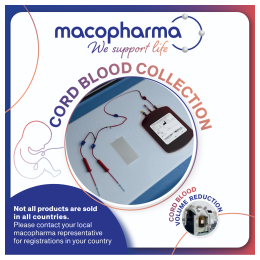
For example, of concern to cord blood bankers is the supply of specialized bags for cord blood collection and processing. Macopharma has become the dominant supplier of cord blood bags in the US, and their collection bags are manufactured in Wroclaw, Poland39. Very often a specialty medical device that is used around the world is produced in a handful of dedicated factories and then shipped internationally. For this report we interviewed Kate Sivertson, the commercial manager of Macopharma USA. She said, “"Like many medical device vendors, tariffs went from 0% for importation of life saving Medical Supplies in 2024 to 10% in April and 15% in August 2025. Every importer must also have a bond (insurance for tariff/customs payments), which goes up - or down - with the funds a company may owe the government for imports. As none of these factors were known in 2024, they were not included in the budget cycle, and a fraction of these costs were regrettably added to our sales prices late 2025."
In overall hospital budgets, an industry trade journal estimates that 10.5% is spent on imported goods, from a variety of countries40. “Thus, if tariffs drive cost increases by 15–22 percent, estimated total hospital expenses could increase by approximately 1–4 percent”40. As we explained above, the hospitals are dependent on the federal government to adjust their base payment rates and DRG codes to compensate for their increased cost of treating hospitalized patients28. Otherwise, the hospitals must absorb these costs, even if it means operating at a loss.
Conclusions
If this investigative report is the first on the topic of tariffs and blood, it is probably because this topic is too complicated for any sane person to tackle. Although blood is big business, it is a very multi-national business where blood donations, materials, and expertise from around the world are brought together to produce blood products to save patient’s lives. The introduction of cross-border tariffs into this complex international network is like throwing a wrench into a machine. Different companies and organizations involved in this endeavor may adopt different strategies for handling the disruption from tariffs, but some of the costs and difficulties incurred will be passed downstream.
References:
- Lowell M, Heeren P, Angotti J, Rodriguez-Johnson L, Lowell K, Fisher CE. SmithReedTrade Complaince Resource Hub. Trump 2.0 tariff tracker. Last updated 2025-11-02
- American Red Cross. How can one donation help multiple people? Blood Components. Accessed 2025-11-01
- Garraud O, Tissot J-D. Blood and Blood Components: From Similarities to Differences. Frontiers Medicine, Transfusion Medicine and Blood. 2018; 2018:00084.
- RWJBarnabas Health. Understanding Blood Components and Fractions. YouTube. Accessed 2025-11-01
- US Food and Drug Administration (FDA). Regulation of the Blood Supply. CBER Update. Last updated 2025-02-04
- Association for the Advancement of Blood & Biotherapies (AABB). Regulatory for Blood and Blood Components. Regulatory Affairs. Accessed 2025-11-01
- US Food and Drug Administration (FDA). Do blood, blood components, plasma, and source leukocytes qualify for import for export? Import for Export. Last updated 2024-10-08
- Eketunde A, Thomasson R. Transfusion medicine | Quality and compliance | Shelf lives of products. Pathology Outlines. Last updated 2024-04-09
- Australian Red Cross. Solving rare blood type mysteries. Trending research. Published prior to 2021
- American Red Cross. The Science of Rare Blood. Published 2024-02-29
- Blood Engineers TV. Apheresis Machine. YouTube. Accessed 2025-11-01
- Chapter 2: The U.S. Blood Supply System. From the book: HIV And The Blood Supply: An Analysis Of Crisis Decisionmaking. Institute of Medicine (US) Committee to Study HIV Transmission Through Blood and Blood Products; Leveton LB, Sox HC Jr., Stoto MA, editors. Washington (DC): National Academies Press (US); 1995.
- Consumer News and Business Channel (CNBC). Why So Many Companies Want U.S. Blood. YouTube. Published 2022-02-03
- Jaworski P. America’s plasma contribution to the world. Blood Plasma Quarterly. Published 2024-11-18
- Ochoa A, Shaefer HL, Grogan-Kaylor A. The Interlinkage between Blood Plasma Donation and Poverty: An Examination of the Location of Plasma Centers in the United States. J Soc. & Soc. Welfare. 2021; 56(2)
- Hobbs J. Chapter 3: Life-giving, Life-threatening: Plasma Donation at the US–Mexico Border. From the book: Bodily Fluids, Fluid Bodies and International Politics. Bristol, UK: Bristol University Press. (2024)
- Dooley JM, and Gallagher E. Blood Money: Selling Plasma to Avoid High-Interest Loans. Review of Financial Studies. 2024; 37(9):2779–2816.
- McConnell B, Zapryanova M, Kang S. Financial Incentives and Public Safety: The Role of Blood Plasma Donation Centers in Crime Reduction. Social Science Research Network. 2025;
- Sumner S. America's 9th Largest Export. Econlog Post. Published 2024-09-09
- Market Research Future. US Plasma Fractionation Market. Published 2025-10
- Market Analysis Report. Plasma Fractionation Market.
- Londono JAS. The Global Plasma Economy: A Multibillion-Dollar Industry. Cornell SC Johnson College of Business. Blog. Published 2025-05-30
- California Specialty Pharmacy. How is IVIG made? Published 2025-07-11
- Mikail M. Cost of IVIG Treatment. AmeriPharma Blog. Last updated 2024-10-28
- Stachowiak J, Dwyer B. Treating MS With Intravenous Immunoglobulin (IVIG). Verywell Health. Last updated 2023-11-26
- AmericanPharma Wholesale. Fibryga 1150 MG VI 1 Gm by Octapharma. Shopping Cart. Accessed 2025-11-01
- Abrahamyan L, Tomlinson G, Callum J, Carcone S, Grewal D, Bartoszko J, Krahn M, Karkouti K. Cost-effectiveness of Fibrinogen Concentrate vs Cryoprecipitate for Treating Acquired Hypofibrinogenemia in Bleeding Adult Cardiac Surgical Patients. JAMA Surgery. 2023; 158(3):245–253.
- Davis E, Brauner D. How a DRG Determines How Much a Hospital Gets Paid. Verywell Health. Published 2024-02-08
- US Centers for Medicare & Medicaid Services. FY 2025 IPPS Final Rule Home Page. Department of Health and Human Services. Effective 2025-10-01
- Center for Healthcare Quality and Payment Reform. The Crisis in Rural Health Care. Reports. Accessed 2025-11-01
- Caring Casa. How to Administer IV Albumin from a Glass Bottle *LIVE DEMO*. YouTube. Accessed 2025-11-01
- Leduc C. IVIG Brands: In-Depth Guide. AmeriPharma. Last updated 2025-09-26
- Kaeberlein S. How Is IVIG Made? The Intricate Steps of IVIG Manufacturing Revealed. AmeriPharma Blog. Published 2024-07-10
- US Food and Drug Administration (FDA). Post-approval Considerations for Changes to Manufacturing Process and Facilities. YouTube. Posted 2020
- American Red Cross. US Blood Supply Facts. Accessed 2025-11-01
- BusinessWire. BioLife Plasma Services Introduces the New Fresenius Kabi Adaptive Nomogram Across its U.S. Network of Plasma Donation Centers. Yahoo!finance. Published 2025-05-05
- Fresenius. Fresenius Kabi inaugurates €30 million expansion of transfusion and apheresis disposables plant in Dominican Republic. Media. Published 2020-01-24
- Terumo. CSL Plasma and Terumo Blood and Cell Technologies Announce Completion of Nationwide Rollout of Rika Plasma Donation System. News. Published 2025-09-26
- Macopharma. Sterile cord blood collection kit. FDA Package Insert. Accessed 2025-11-01
- Hider AM, O'Connell D, Berlin NL. Tariffs: Added Strain On The US Health Care System. Health Affairs. Published 2025-09-18