Sie sind hier

KRIO Institute & family cell banking in Hungary
Hungary is rarely perceived as a hot spot for stem cell medicine, yet over the past 27 years, the KRIO Institute in Budapest has evolved from a local pioneer to a European leader in biobanking. In 2025 the KRIO Institute was recognized as the best performing company in the FamiCord Group of more than 20 cord blood businesses.
KRIO began in reproductive medicine
KRIO was founded in 1998 as a sperm bank, partly as a family business but also with the support of private Hungarian investors. Before the storage of autologous corrd blood became well known in Europe, KRIO was already working with IVF centers and individual clients to preserve reproductive cells for autologous use.
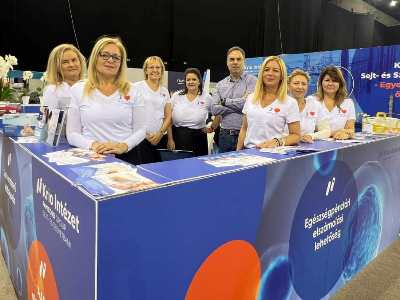 This early focus created two lasting advantages. First, KRIO built a nationwide professional network across obstetrics, gynecology, and assisted reproduction. Second, KRIO gained experience in consumer-facing healthcare communication, where credibility and reassurance are essential.
The Hungarian family support system
Hungary’s population of 9.6 million people speak a different language from their surrounding countries, and have a strong sense of national identity. Hungary also represents a relatively distinct genetic population within the region. Although Hungary is facing declining birth rates, like all European countries, Hungary has built one of Europe’s most comprehensive family support systems. Parenthood is a priority in Hungary, and mothers receive protections for their health, their career, and their financial well-being.
 The health visitor network (védőnői hálózat) is a uniquely Hungarian institution which was established in 1915 and has played a distinctive role in maternal and child health ever since. Every expectant mother is assigned a dedicated health visitor early in pregnancy, who remains involved through childbirth and the child’s early years. The health visitors are trained professionals, and are Integrated into the public healthcare system.
After birth, new mothers in Hungary are entitled to two to three years of parental leave, without any jeopardy to their employment when they are ready to return. The government also offers financial support, in a series of stages, until the child reaches age three.
The launch of cord blood banking at KRIO
When KRIO began cord blood banking in 2004, they chose a gradual approach, prioritizing their local laboratory, domestic storage, and regulatory alignment over rapid volume growth.
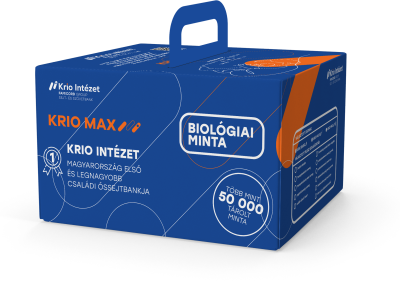 Hungary’s compact geography supports simple and predictable logistics. Beyond logistics, having a local laboratory presence carries regulatory weight in Hungary. The national healthcare system is characterized by strong state involvement and a high level of centralization. Hungarian authorities place emphasis on demonstrating a physical presence, continuity, and traceability.
Over the past decade, Hungary has enforced full nationalization of private IVF centers. This did not impact the KRIO cord blood bank, which operates under a different regulatory framework. As the country’s first and largest sperm bank, the KRIO Institute survived the nationalization and ultimately retained its market position, as its role had become essential to the system and could not realistically be excluded.
The sense of national identity in Hungary contributes to the business success of KRIO Institute. Services that are clearly Hungarian—operated locally, communicated in the native language, and embedded in domestic medical practice—tend to build stronger trust. In this context, local laboratory infrastructure offers not only a technical or regulatory advantage, but also a cultural one.

Medical care across Hungary
Hungary has approximately 100 state-owned hospitals, the vast majority of which operate maternity wards. About 99% of births in Hungary take place in hospital settings, even though home births are allowed. Maternity care in state hospitals is covered by Hungary’s universal healthcare program at no charge. In parallel, over the past several years, private hospitals have been appearing year after year, many of which also offer private maternity services.
KRIO maintains working relationships across the entire hospital network in Hungary. As a result, cord blood and tissue collection is available nationwide, regardless of whether parents choose public or private maternity care.
Therapeutic relevance
 An early milestone came in 2009 when a small number of domestic transplants used cord blood units stored at KRIO. These patient stories strengthened consumer confidence and accelerated KRIO’s recognition in the market.
In recent years, KRIO has seen increasing numbers of releases to treat neurological indications such as cerebral palsy and autism spectrum disorders at specialized EU centers. Though still small numbers, these cases reflect a shift toward viewing cord blood as a potentially actionable medical resource.
Supporting families during disruption
An aspect of consolidation in the Hungarian cord blood market was how affected families were treated during periods of disruption. In the early days of KRIO’s cord blood banking, the market leader in Europe was a bank named Cryo-Save. Over time, KRIO not only caught up with Cryo-Save in Hungary, but steadily expanded its market share.
In the summer of 2019, Cryo-Save went out of business without warning. Many families faced uncertainty regarding their stored samples and long-term commitments. KRIO played a stabilizing role in Hungary by taking over these accounts, recognizing previously paid fees, addressing individual requests case by case, and maintaining continuous, transparent communication. This approach focused on reassurance, continuity of care, and rebuilding trust at a critical moment.
A business model built for stability and trust
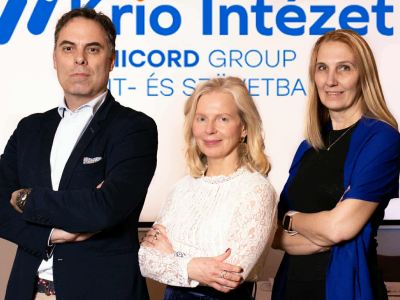 The three leaders of KRIO in the photo, from left to right: János Sebes – Chief Commercial Officer; Zsuzsanna Takács – Chief Executive Officer; Gabriella Horváth – Chief Financial Officer.
Many KRIO families choose to pay annual storage fees that create predictable, recurring revenues to KRI Institute. In a market with moderate purchasing power, restrained pricing, and a standard VAT rate of 27%, running a profitable business depends primarily on sufficient scale and efficient local optimization. The KRIO financial model has enabled continued investment in laboratory standards, quality systems, and long-term operational reliability without reliance on aggressive discounting.
KRIO has held AABB accreditation since 2010, aligning its processes with an international quality benchmark for cellular therapy and biobanking.
Cultural factors play a central role in health decisions for Hungarian families, where a child-centered mindset supports willingness to invest in children’s future and acceptance of private healthcare entities. In this context, brand switching is rare, making trust and loyalty decisive factors that favor providers with long-standing presence and proven reliability.
KRIO’s internal structure is another stabilizing factor. The KRIO Institute operates with a cohesive team characterized by low staff turnover and a strong core group that has worked together for more than a decade. In regulated, precision-dependent fields such as cell banking, this level of continuity contributes directly to operational consistency and institutional resilience.
 Integration into the FamiCord Group
KRIO joined the FamiCord Group in 2008, a move that proved strategically beneficial for both sides. For the Group, KRIO provided a mature and stable identity in Hungary. For KRIO, group membership brought strategic flexibility through access to shared scientific expertise, harmonized quality systems, and the financial backing of FamiCord AG.
Today, Hungary has a limited number of licensed family cell banking providers, yet KRIO holds a clearly dominant position in visibility, operational depth, and long-term trust. As earlier competitors fell behind and portfolios were acquired over time, stem cell and reproductive cell storage has become closely associated with a single institution for many Hungarian families. In Hungary’s consolidated, trust-driven cell banking sector, KRIO has become the benchmark for reliability.
In the final photo, the leaders of KRIO Institute stand together with the leadership of FamiCord.